Chinna Nadan Turmeric: Bringing Traditional Indian Turmeric to Your Festive Kitchen
Before any lamp is lit and before any sweet is offered, there is often a small golden mark. A dot of turmeric on the doorstep. A pinch on the thread around a new tool. A smear on a coconut before it is placed on a kalasam.
That tiny colour says something without words: this is a beginning, and it is blessed. Chinna Nadan turmeric belongs to that tradition, and as Dussehra approaches, it is worth knowing what makes this variety special and how to use it in both puja and kitchen.
What is Chinna Nadan turmeric?

Chinna Nadan turmeric is a traditional native variety of turmeric root, sun-dried and ground into a deep yellow powder. It is valued in Indian kitchens and rituals for its rich colour, earthy aroma and warm, slightly bitter flavour.
What makes Chinna Nadan turmeric traditional
Turmeric has been grown across India for centuries, and many regions have their own local varieties. The word nadan is commonly used in South India to describe something native or local, which hints at how this variety earned its name: it is one of the older, country types that farmers have preserved.
Our organic Chinna Nadan turmeric powder is grown organically and ground in small batches. Its colour is a deep, warm gold, and you can smell the roots the moment you open the jar. For a broader background on the plant itself, see this overview of turmeric.
Turmeric in Dussehra traditions
Turmeric is present in nearly every corner of a traditional Navaratri. Homes host haldi-kumkum gatherings where turmeric and vermilion are offered to visiting guests. On Ayudha Puja, tools, books and vehicles are marked with turmeric and kumkum. Golu displays, kalasam arrangements and puja plates all include a bit of turmeric.
It is not only ceremonial. The same yellow powder is stirred into the sambar you serve after the puja is over.
| Where turmeric appears | How it is used |
|---|---|
| Puja and rituals | Marks on doorways, tools, kalasam and coconut |
| Haldi-kumkum | Offered to guests with betel leaves and gifts |
| Sambar, rasam, kootu | Added early for colour and flavour |
| Sundal and rice dishes | A pinch for a warm golden tone |
How to use Chinna Nadan turmeric in festive cooking
- Add it early in dal and sambar. Turmeric needs a little cooking time to lose its raw edge.
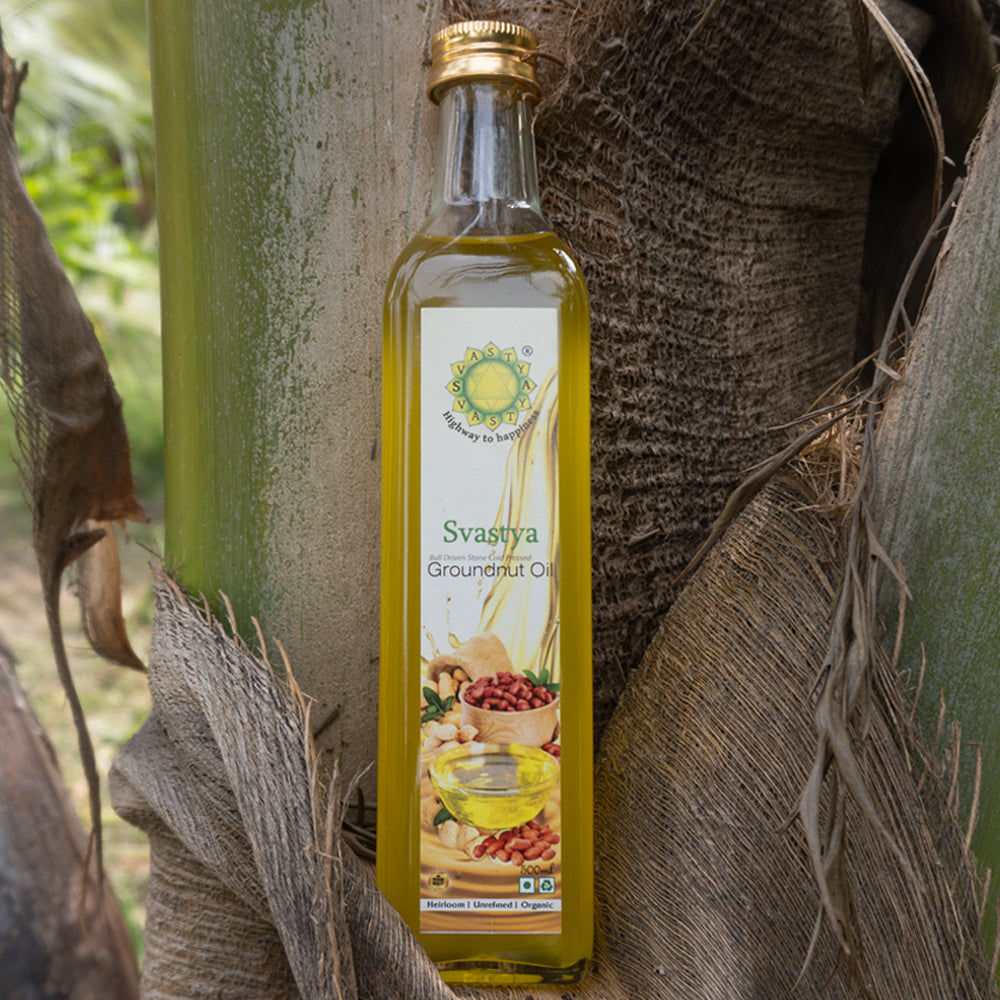
- Bloom it briefly in oil. A few seconds in warm groundnut oil deepens the aroma. Try cold-pressed groundnut oil for tempering.
- Do not burn it. Turmeric scorches quickly, and burnt turmeric turns bitter.
- Use a small amount. A quarter to half a teaspoon is usually enough for a family pot.
Turmeric loves company. It sits comfortably beside heirloom cumin, mustard, curry leaves and organic sambar powder in a festive lunch.
Storing turmeric so it keeps its colour
- Keep it in an airtight glass or steel jar.
- Store it away from sunlight and steam, since moisture dulls the colour.
- Use a dry spoon every time.
- Buy in smaller quantities and refill often for the freshest aroma.
The small yellow mark that says "welcome"
There is a moment in many Navaratri evenings that people rarely photograph. A guest arrives, and the host takes a pinch of turmeric and a little kumkum, and applies a small mark. No speeches. No announcement. Just a gentle way of saying, you are welcome here, and you are part of this celebration.
That gesture asks nothing of us except attention. It is a reminder that hospitality was once made from simple things, a plate, a betel leaf, a pinch of yellow. It is easy to forget how much a small gesture can carry.
The same is true in cooking. When you stir turmeric into a pot of dal on the morning of Dussehra, you are joining a very long line of cooks who did the same thing before you. The colour is the same, the aroma is the same, and the pot is warm.
So this festival, look at the golden jar in your kitchen a little differently. Choose Chinna Nadan turmeric for what it is: a traditional root, carefully grown, meant to be used in both prayer and meals. Open the jar, breathe in, and begin your festival with a little gold.
About Svastya's Organic Chinna Nadan Turmeric Powder
Svastya's Organic Chinna Nadan Turmeric Powder is ground from the traditional Chinna Nadan variety, a native strain grown organically rather than the high-yield hybrids common in the market today. Its colour is a deep, warm gold, and the aroma is noticeably stronger the moment the jar is opened. Whether it is stirred into a pot of sambar or used for a haldi-kumkum mark at the doorstep, it carries the same rooted, traditional character in both roles.
Frequently Asked Questions
1. What is Chinna Nadan turmeric?
It is a traditional native turmeric variety, dried and ground into a deep yellow powder for cooking and ritual use.
2. How is turmeric used during Navaratri and Dussehra?
It is used in haldi-kumkum, to mark tools and kalasam during puja, and in everyday festive cooking.
3. When should I add turmeric while cooking?
Add it early in dals and sambar, or bloom it briefly in warm oil. Avoid burning it, as it turns bitter.
4. How should I store turmeric powder?
Keep it airtight, away from sunlight and moisture, and use a dry spoon each time.