Types of Honey Bees in Western Ghats: A Complete Guide
The Western Ghats, a UNESCO World Heritage Site and one of the world’s eight biodiversity hotspots, is home to a remarkable diversity of honey bees in Western Ghats ecosystems. At Svastya Organic Farms, we recognize the vital role these pollinators play in maintaining ecological balance and producing pure, wild forest raw honey. Understanding the different species of honey bees found in this region helps us appreciate their ecological importance, honey characteristics, and long-term conservation needs.
The Rich Honey Bee Diversity of Western Ghats
The Western Ghats mountain range, stretching across six Indian states, provides ideal conditions for various honey bee species. The region's tropical climate, abundant flora, and diverse elevation zones create perfect habitats for these essential pollinators. Let's explore the four primary honey bee species found in this biodiversity-rich region.
1. Giant Honey Bee (Apis dorsata)
![Giant honey bee colony hanging from tree branch in Western Ghats forest]](https://cdn.shopify.com/s/files/1/0610/1686/6978/files/giant-honey-bee-colony-hanging-from-tree-branch-in-western-ghats-forest.png?v=1769151774)
The giant honey bee, locally known as "Rock Bee" or "Dammer Bee," is the largest honey bee species in India. These impressive insects build massive single-comb nests that can measure up to 1.5 meters in length, typically suspended from high tree branches, cliff overhangs, or building structures.
Key Characteristics:
- Workers measure 17-20mm in length
- Highly aggressive defensive behavior
- Seasonal migratory patterns following flowering cycles
- Produces 30-40 kg of honey per colony annually
- Prefers nesting at heights of 5-25 meters
The giant honey bee plays a vital role in pollinating large forest trees and contributes significantly to wild honey collection in the Western Ghats. Their honey is prized for its medicinal properties and distinct flavor profile.
2. Indian Honey Bee (Apis cerana indica)

The Indian honey bee is the most widely domesticated species for traditional and commercial beekeeping across the Western Ghats. This indigenous species has adapted perfectly to India's tropical and subtropical climate conditions.
Key Characteristics:
- Medium-sized workers (10-11mm)
- Builds multiple-comb nests in cavities
- Gentle temperament, ideal for beekeeping
- Disease-resistant and well-adapted to local conditions
- Produces 8-12 kg of honey per colony annually
At Svastya Organic Farms, we prioritize maintaining Apis cerana colonies due to their excellent pollination efficiency for organic crops and their sustainable honey production capacity. This species is particularly important for small-scale organic beekeeping operations throughout the region.
3. Little Honey Bee (Apis florea)

The little honey bee, also called the dwarf honey bee, is the smallest true honey bee species found in the Western Ghats. Despite their diminutive size, these bees are remarkable pollinators for understory plants and herbs.
Key Characteristics:
- Tiny workers measuring 7-10mm
- Builds single, exposed comb nests on shrubs and small trees
- Nests typically 6 inches in diameter
- Gentle and non-aggressive nature
- Produces 200-500 grams of honey per colony
While their honey production is limited, little honey bees are crucial for maintaining the Western Ghats' understory plant diversity. Their preference for lower vegetation makes them important pollinators for many medicinal plants and herbs cultivated in organic farming systems.
4. Himalayan Honey Bee (Apis laboriosa)

Though primarily associated with higher Himalayan elevations, Apis laboriosa has been documented in the higher altitude zones of the Western Ghats, particularly in the Nilgiris and other elevated regions.
Key Characteristics:
- Largest honey bee species globally (workers 17-20mm)
- Prefers altitudes above 1,200 meters
- Extremely defensive behavior
- Produces psychoactive "mad honey" in certain regions
- Limited distribution in Western Ghats
5. Apis mellifera Honey (European Honey Bee)

Though not native, Apis mellifera is introduced in limited commercial beekeeping operations near the Western Ghats, especially in plantation zones.
Key Features:
-
Higher yield per colony
-
Light-colored honey with a neutral taste
-
Commonly used in large-scale commercial markets
-
Requires intensive hive management and disease control
While productive, Apis mellifera is less adapted to forest ecosystems and does not contribute to biodiversity conservation as effectively as native species.
6. Dammer Bee Honey

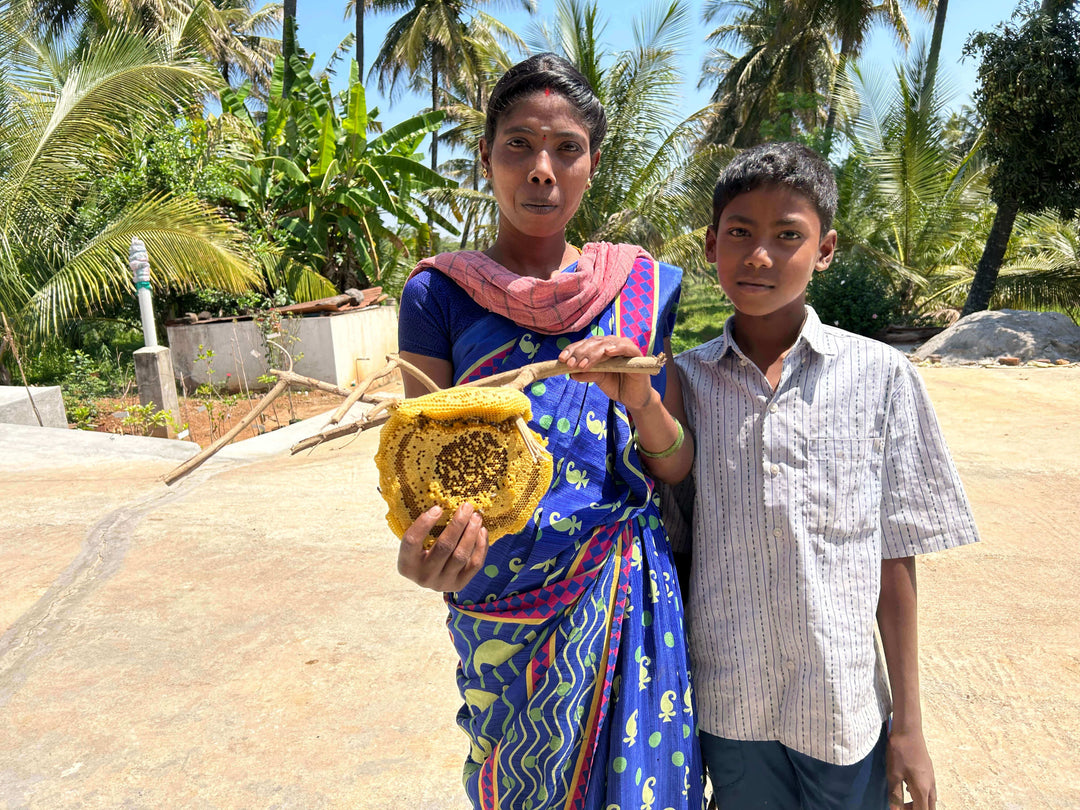
Also known as rock bee honey, this honey is produced by dammer bees, the giant wild honey bees of the Western Ghats.
Key Features:
-
Wild, polyfloral forest honey
-
Dark amber to golden color
-
Strong, complex flavor with medicinal bitterness
-
Extremely rich in minerals and antioxidants
-
Harvested using traditional honey hunting methods
Dammer bee honey is rare, seasonal, and highly valued for its therapeutic properties. It represents the purest form of wild forest honey from the Western Ghats.
Conservation and Sustainable Beekeeping Practices
The Western Ghats face increasing environmental pressures from deforestation, climate change, and agricultural intensification. At Svastya Organic Farms, we advocate for sustainable beekeeping practices that protect native honey bee populations:
- Maintaining natural forest habitats for wild colonies
- Avoiding harmful pesticides and chemicals
- Supporting traditional honey harvesting methods
- Promoting organic farming to preserve bee forage
- Educating local communities about bee conservation
The Role of Honey Bees in Organic Agriculture
Honey bees are indispensable to organic farming in the Western Ghats. Their pollination improves:
- Crop yield
- Fruit quality
- Seed production
- Overall ecosystem health
Studies show that bee pollination can increase productivity by 20–35% in pollinator-dependent crops.
Conclusion
The honey bee diversity of the Western Ghats is a priceless natural asset. Each species—from the towering giant honey bee to the delicate little honey bee—plays a unique ecological role.
By supporting sustainable beekeeping and organic farming, we can protect these essential pollinators for future generations.
At Svastya Organic Farms, we work in harmony with nature—protecting native bees while producing pure, organic honey rooted in ecological balance.
Frequently Asked Questions (FAQs)
1. How many types of honey bees are in the Western Ghats?
There are four main honey bee species found in the Western Ghats: Apis dorsata, Apis cerana indica, Apis florea, and Apis laboriosa.
2. Which honey bee produces the most honey in the Western Ghats?
The Giant Honey Bee (Apis dorsata) produces the highest quantity, yielding 30–40 kg of honey per colony annually.
3. Which honey bee is best for organic beekeeping?
The Indian Honey Bee (Apis cerana indica) is ideal for organic beekeeping due to its gentle nature, disease resistance, and adaptability to local conditions.
4. Why are honey bees important for the Western Ghats ecosystem?
Honey bees support pollination, biodiversity, forest regeneration, and agricultural productivity, making them essential for ecological balance in the Western Ghats.