Cold Pressed Oil vs Refined Oil: What You Should Really Be Using Daily
Cooking oil is the one ingredient that touches almost every meal your family eats. It is the first thing into the pan and the last flavour that lingers. Yet for most households, the choice of oil is made quickly — often by price, packaging, or habit rather than by any real understanding of what is in the bottle. That is beginning to change. Across India and among health-conscious communities worldwide, the question of cold pressed oil vs refined oil is being asked with new seriousness. Not as a passing wellness trend, but as a practical, informed decision about the quality of daily nourishment.
This article is a complete, honest guide to that question — without exaggeration, without fear, and with the full respect that a topic this important deserves.
What Are Cold Pressed Oils?

Cold pressed oils are extracted from whole seeds using mechanical pressure at ambient temperatures — without external heat, chemical solvents, or industrial refining. The process is as old as Indian civilisation itself.
The most traditional form is bull driven extraction through a wooden ghani press: whole seeds are loaded into a large wooden mortar, a bullock harnessed to a long beam walks in slow circles, rotating a wooden pestle that gradually crushes the seeds and releases their oil drop by drop. Temperatures in this process rarely exceed 40°C — cool enough that every nutritionally sensitive compound in the seed survives intact.
The defining characteristic of cold pressed oil is not just what it contains — it is what has not been removed. Natural vitamins, antioxidants, essential fatty acids, phytosterols, and the genuine aroma compounds that give each oil its distinctive character are all present because nothing has been done to take them away.
Cold pressing is not a modern wellness invention. It is simply the way oil was always made — before industrial processing offered speed at the price of nutritional integrity.
What Are Refined Oils?
Refined oils are produced through a multi-stage industrial process designed to maximise yield, extend shelf life, and create a neutral, consistent product at scale. Understanding this process is the clearest way to understand why the comparison matters.
Industrial extraction begins with high-heat mechanical pressing (120–200°C+), often followed by solvent extraction — typically using hexane, a petroleum-derived chemical — to extract the maximum possible oil from the seed. The crude oil is then subjected to:
- Degumming — removes phospholipids
- Neutralisation — removes free fatty acids using alkali
- Bleaching — removes colour using activated clay or charcoal
- Deodorising — high-temperature steam stripping removes aroma compounds
Each of these stages serves a legitimate industrial purpose — extending shelf life, creating consistency. But each also removes something. By the end, the oil is commercially functional but nutritionally different from what the seed originally contained.
Cold Pressed Oil vs Refined Oil — Key Differences

Here is a clear, honest comparison across every dimension that matters for daily cooking and long-term wellness. Cold pressed oil vs Refined oil which is the better choice for daily use:
| Parameter | 🌿 Cold Pressed Oil | ⚙️ Refined Oil |
|---|---|---|
| Extraction method | Wooden ghani / mechanical press — no chemicals Traditional | High-heat expeller + hexane solvent Industrial |
| Temperature | Ambient — 28 to 45°C throughout Low heat | 120–200°C+ at multiple stages High heat |
| Nutrient retention | High — vitamins, antioxidants, fatty acids intact Preserved | Significantly reduced across refining stages Reduced |
| Natural aroma | Rich, seed-specific, authentic Genuine | Deodorised — essentially odourless Removed |
| Colour | Natural golden to amber tones Authentic | Bleached to near-clear or pale yellow Stripped |
| Chemical use | Zero — no solvents, bleaching, or deodorising None | Hexane, alkali, clay bleach, steam deodoriser Multiple |
| Processing stages | Single-step extraction Transparent | 4–6 industrial refining stages Complex |
| Natural sediment | Present — sign of minimal filtration Normal | Absent — filtered to clarity Removed |
| Shelf life | 6–14 months (variety-dependent) Natural | 12–24 months (extended via processing) Industrial |
| Flavour in cooking | Distinctive, seed-characteristic, enhances dishes Rich | Neutral — does not alter flavour Bland |
Why Many Consumers Prefer Cold Pressed Oils for Daily Use
The growing preference for cold pressed oils is not driven by marketing. It is driven by a more thoughtful reading of what goes into the oil and what comes out of it — and a desire to cook with something that is honest and complete.
Cold Pressed Oil vs Refined Oil: Why consumers are preferring cold pressed oils:
Nutritionally Complete
Natural vitamins, antioxidants, and fatty acids are present in their original form — not partially removed and partially replaced with synthetic alternatives.
Real Flavour in Every Dish
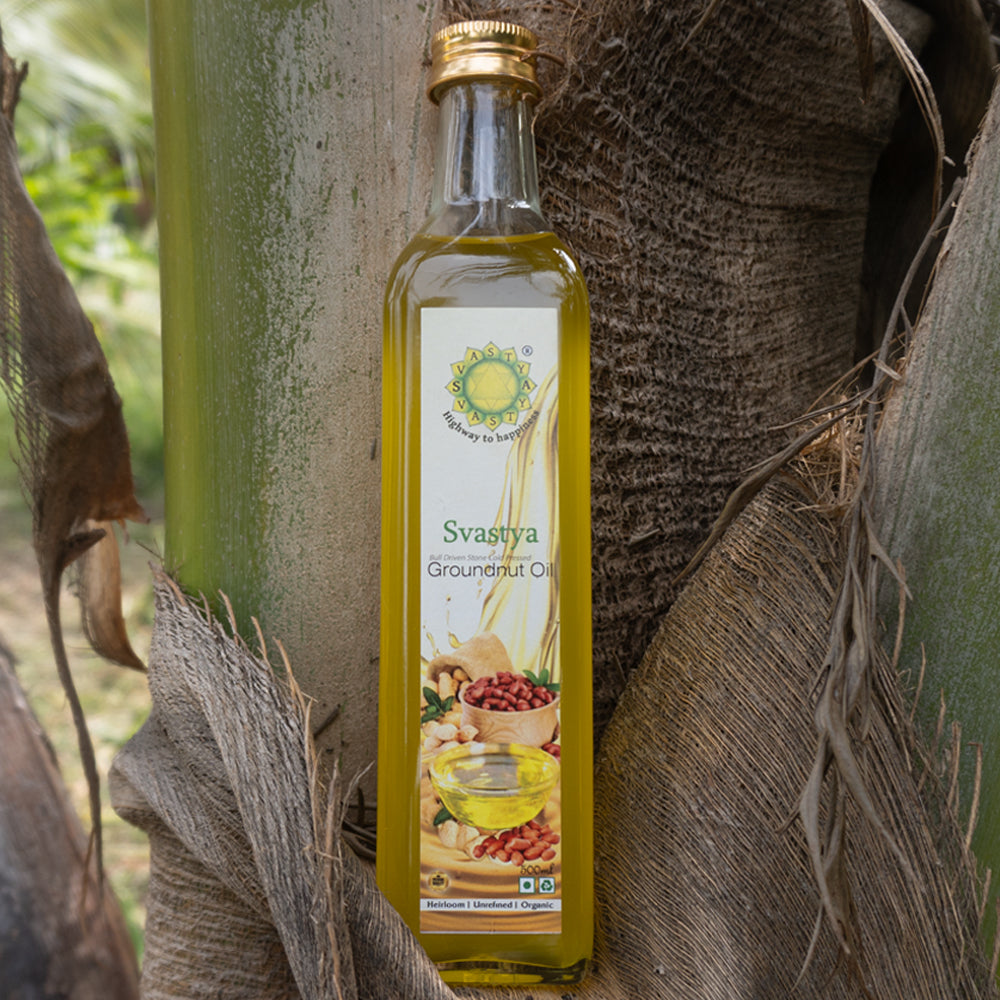
Cold pressed groundnut oil carries warm nuttiness. Mustard oil carries bold pungency. Sesame oil carries its signature depth. These flavours belong in Indian cooking.
No Chemical History
No hexane. No bleaching agents. No synthetic antioxidants added in place of natural ones. The oil's entire journey from seed to bottle involves no chemical intervention.
Supports Ayurvedic Values
Ayurveda's concept of ahara shuddhi — food purity — is most completely expressed in oils that have not been stripped of their natural intelligence.
Supports Traditional Communities
Choosing bull driven cold pressed oil is a direct investment in traditional artisan oil pressers and small-scale organic farming livelihoods across India.
Sustainable & Mindful
Animal-powered extraction leaves a fraction of the environmental footprint of industrial oil production — less energy, no chemical waste, no industrial processing chain.
A Balanced Look at Highly Refined Oils
Refined oils are safe for consumption and are used daily by billions of people around the world. The purpose here is not alarm — it is honest context. Understanding the refining process helps consumers make more informed choices, not fearful ones.
There are a few aspects of industrial oil refining that are worth understanding clearly:
- Nutrient loss through heat:High-temperature extraction (120–200°C+) reduces Vitamin E, polyphenols, and other heat-sensitive compounds that are naturally present in seeds. These are not dangerous to consume — but their absence means the oil delivers less nutritional value than its unrefined equivalent.
- Solvent extraction:Hexane is used industrially to extract residual oil from seeds after mechanical pressing. While regulated and generally considered safe at trace levels by food authorities, some consumers prefer oils with zero chemical contact throughout their production journey.
- Bleaching and deodorising:These stages create a neutral, consistent product — which is why most refined oils look and taste alike. They also remove the natural colour and aroma compounds that distinguish each oil and carry nutritional significance.
- Absence of natural flavour:A deodorised oil cannot contribute the flavour depth that traditional Indian cooking relies on from sesame, mustard, or groundnut oil. For those who care about culinary authenticity, this is a real and daily limitation.
How to Choose the Right Oil for Your Kitchen
There is no single right answer for every household — but there is a framework that makes the choice much clearer.
Match Your Cuisine
South Indian cooking calls for sesame or groundnut oil. North and East Indian for mustard. Coastal for coconut. Choosing traditionally means choosing flavour depth.
Know Your Heat
Cold pressed oils suit medium-heat cooking, tadka, curries, and sautéing perfectly. Use ghee for very high-temperature cooking where even greater stability is needed.
Trust Your Nose
Cold pressed oil should smell of its seed. If the oil has no aroma, it has been deodorised. Authentic oils announce themselves before you even open the pan.
Read the Label
Look for "cold pressed," "wooden ghani," "bull driven," or "wood pressed" with specific extraction detail. Vague claims like "natural" without process description warrant scrutiny.
Ask About Sourcing
The best cold pressed oil producers can name their source farms and regions. Transparent sourcing is a sign of a brand that takes quality as seriously as you do.
Choose Glass
Unrefined oils stored in glass are protected from light, heat, and chemical leaching. Premium traditional oil deserves packaging that respects what's inside.
How to Identify Authentic Cold Pressed Oils

The growing market for traditional oils has made it important to distinguish genuinely cold pressed products from those that borrow the language without the practice. These are the markers of the real thing.
-
Aroma is the primary test. Authentic cold pressed groundnut oil smells toasted and warm. Sesame oil smells rich and nutty. Mustard oil is unmistakably pungent. Coconut oil carries its characteristic fragrance. An oil that smells of nothing has been deodorised.
-
Colour reflects authenticity. Cold pressed oils are naturally golden, amber, or deep-coloured — depending on the seed. Bleached oils lose their natural pigments, which carry antioxidant compounds. Clear, pale oil in a variety that should be golden is a warning sign.
-
Sediment is normal and good. A small amount of natural cloudiness or fine sediment in the bottle indicates minimal filtration — a mark of authenticity. Shake gently before use. Water-clear oil with zero sediment has been processed to that appearance deliberately.
-
Labels must be specific. Look for explicit terms: "wooden ghani pressed," "bull driven extraction," "cold pressed — no chemical solvent," or "chekku oil." Generic wellness language without process detail is insufficient and sometimes misleading.
-
Traceability matters. A brand that can tell you which farm, which region, and which pressing artisans produced the oil is a brand that stands behind its product. Svastya names its sources because we believe you have the right to know every step of the journey.
-
Glass protects the oil. Cold pressed oils should be stored in glass, not plastic. Glass prevents light degradation, chemical leaching, and flavour contamination. A brand that invests in glass is communicating that the oil inside is worth protecting.
The Choice Is Simpler Than It Seems
The question of cold pressed oil vs refined oil is ultimately not a difficult one when you understand what each actually is. Cold pressed oil is what seeds produce when they are treated with patience and respect. Refined oil is what industrial processing optimises for scale, consistency, and shelf life — at the cost of much of the nutritional character that made the seed worth pressing in the first place.
This is not about perfection or absolutism. Most households will make practical compromises. But if there is one area where the quality of your daily choices accumulates most meaningfully over time, it is the oil you cook with every single day.
Choosing cold pressed does not require overhauling your kitchen. It requires replacing one bottle at a time with something more honest, more nourishing, and more connected to the culinary traditions that Indian wellness was built upon.
The seed put in the work. The ghani honours it. Your family deserves the result.
Frequently Asked Questions
1. What is the main difference between cold pressed oil and refined oil?
Cold pressed oil is extracted at ambient temperatures using mechanical pressure — traditionally through a wooden ghani press — with no external heat or chemical solvents. It retains its natural nutrients, aroma, colour, and flavour. Refined oil undergoes high-heat extraction (120–200°C+), chemical solvent treatment, bleaching, and deodorising — processes that extend shelf life and create neutral consistency but remove most of the oil's naturally occurring vitamins, antioxidants, and characteristic flavour.
2. Are cold pressed oils more expensive, and is the cost worth it?
Cold pressed oils are typically more expensive than refined oils because traditional extraction methods — particularly bull driven wooden ghani pressing — are more labour-intensive and yield less oil per batch. However, the value includes: full nutritional integrity, zero chemical residues, authentic culinary flavour, support for traditional artisan farming communities, and a more sustainable food system. For daily cooking that affects your family's health every meal, this is an investment many conscious consumers consider genuinely worthwhile.
3. Can I use cold pressed oil for everyday Indian cooking?
Yes — completely. Cold pressed groundnut, sesame, mustard, coconut, and sunflower oils are all well-suited for everyday Indian cooking including tadka, curries, sautéing, and medium-heat frying. These are the same oils that Indian kitchens relied on for centuries before industrial refining became common. Their natural flavours genuinely enhance dishes in ways that deodorised refined oils cannot.