Karuppu Kavuni Payasam for Dussehra: A Traditional Festive Dessert with Jaggery, Ghee & Cardamom
Karuppu Kavuni Payasam begins as a pot of nearly black grains, and somewhere in the second hour of gentle simmering, the milk turns a deep plum while the kitchen fills with the smell of jaggery, ghee and cardamom.
For many Indian families, this is what Dussehra tastes like when the effort is worth it: a slow pot, a patient hand and a dessert that asks you to stay near the stove. This guide explains what Karuppu Kavuni Payasam is, why it suits Navaratri and Vijayadashami, and how to make it the traditional way.
What is Karuppu Kavuni Payasam?

Karuppu Kavuni Payasam is a traditional Indian dessert made by slow-cooking Karuppu Kavuni (black heirloom rice) with milk, jaggery, ghee and cardamom. Its deep purple colour comes from the rice itself, and it is often prepared for festivals such as Dussehra.
- Karuppu Kavuni is a black heirloom rice from Tamil Nadu, prized for its chew and nutty aroma.

- Soak the rice for hours and cook it soft before adding jaggery.
- Cool the jaggery syrup slightly before adding milk.
- Ghee, cardamom and roasted nuts finish the payasam.
Why Karuppu Kavuni Payasam belongs on the Dussehra table
Navaratri is nine nights of lamps, music and offerings, followed by Vijayadashami, the tenth day that celebrates the victory of good over evil. Across South India, the festival kitchen turns sweet. A payasam is often offered to the deity first and then shared with everyone at home.
Karuppu Kavuni has its own place in that tradition. Local folklore links this black rice with royal kitchens of old Tamil Nadu, and while stories differ from village to village, the belief has kept the grain special. When a family chooses Karuppu Kavuni Payasam for Dussehra, it is choosing a dessert with a long memory.
What goes into a traditional Karuppu Kavuni Payasam
For four to five servings, gather:
- ½ cup Karuppu Kavuni rice, soaked for 6 to 8 hours
- 3 cups water for cooking the rice
- 2 cups milk (thick coconut milk also works beautifully)
- ¾ cup powdered jaggery
- 2 tablespoons ghee, plus more to taste
- 4 to 5 cardamom pods, crushed
- Cashews, raisins and thin coconut slivers
Step-by-step: how to make Karuppu Kavuni Payasam
- Cook the rice. Drain the soaked rice and pressure cook it with 3 cups of water until it turns very soft, usually 6 to 7 whistles. Black rice needs more time than white rice.
- Prepare the syrup. Melt the jaggery in a little water, then strain it to remove any grit.
- Bring them together. Mash the cooked rice lightly, add the strained jaggery syrup and simmer for about 10 minutes.
- Add the milk. Let the syrup cool for a minute, then stir in the milk on low heat. This helps prevent curdling.
- Finish with ghee. Fry the nuts and coconut in ghee until golden, then add them with the crushed cardamom.
Let it simmer until the payasam coats the back of a spoon. It will thicken as it rests, so keep some warm milk nearby to loosen it if needed.
Small tips for a better Kavuni arisi payasam
- Soaking overnight gives a softer bite and shortens cooking time.
- Choose an unpolished, organically grown grain for a clean colour and a nutty aroma.
- Use freshly ground cardamom, since the aroma fades quickly in stored powder.
- Serve warm on the festival day, or chilled the next morning if any is left.
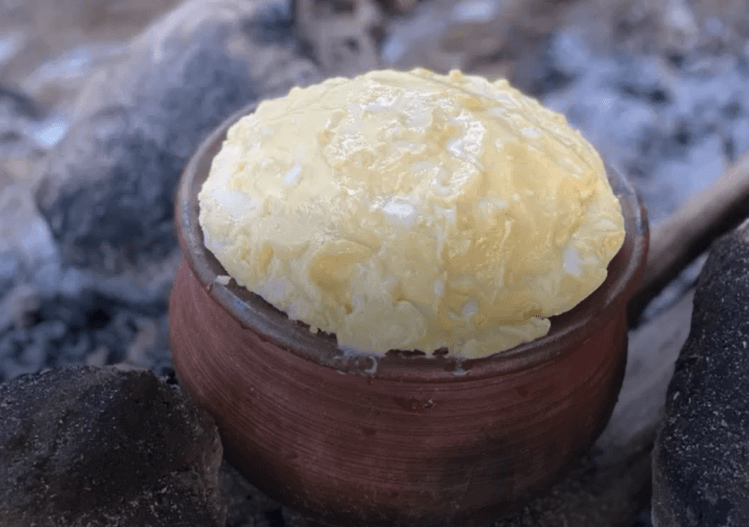
Ghee and cardamom matter as much as the rice. A spoon of A2 bilona ghee roasts the nuts to a golden shade, and heirloom white cardamom carries the fragrance through every bite.
A dessert that teaches patience
Think about what a slow payasam asks of you. Watching the pot, stirring when the steam rises, tasting for sweetness, and waiting. In a fast week, that pause is rare. During Dussehra, it becomes part of the ritual.
In many homes, children are handed the wooden ladle for the last few stirs, and that is how recipes travel from one generation to the next. Nobody writes down the exact number of minutes. They remember the colour changing, the first smell of cardamom, and the way the whole family gathered before the first spoon.
Karuppu Kavuni Payasam is not just something sweet to end a meal. It is a reminder that some traditions taste better because they are made slowly, and shared while still warm.
If you enjoy learning about grains, read our guide on polished, unpolished and hand-pounded rice, or see how to cook the grain for everyday meals in our Karuppu Kavuni rice cooking guide.
About Svastya's Organic Karuppu Kavuni Rice
Our Organic Karuppu Kavuni Rice is grown organically and hand-pounded, so the bran layer that carries its deep colour and nutty aroma stays intact. It cooks up soft yet chewy, which is exactly the texture a payasam needs to hold its body as it simmers. No chemical fertilisers or pesticides go near the crop, so what reaches your pot is the grain in its most traditional, unprocessed form. It is a small ingredient with a big presence on the festival table.
Frequently Asked Questions
What is Karuppu Kavuni Payasam made of?
It is made from Karuppu Kavuni black rice, milk or coconut milk, jaggery, ghee and cardamom, often finished with roasted nuts.
How long should I soak Karuppu Kavuni rice for payasam?
Most home cooks soak it for 6 to 8 hours or overnight. This softens the grain and shortens cooking time.
Why does my payasam curdle after adding milk?
Very hot jaggery syrup can split milk. Let the syrup cool slightly and add the milk on low heat.
Can I make Karuppu Kavuni Payasam with coconut milk?
Yes. Thick coconut milk gives a richer, dairy-free version that many families prefer during festivals.