From Farm to Kitchen: What Makes A2 Bilona Ghee So Special?
The Golden Question: Is Your Ghee Truly Pure?
There's something quietly sacred about ghee in the Indian household. It finishes a dal, blesses a temple lamp, and features in the very first food many newborns receive. As awareness around A2 bilona ghee grows, more people are beginning to question whether what they’re using truly reflects this rich tradition. Yet today, most of what sits on supermarket shelves is a pale, industrialised shadow of this ancient superfood.
The gap between what ghee used to be and what it often is today is exactly why A2 Bilona Ghee matters. It isn't a trend — it is a return. A return to the way ghee was always meant to be made: from the right cows, using the right method, with nothing added and nothing taken away.
"In the race for scale and shelf-life, the food industry sacrificed the very qualities that made traditional ghee nourishing. A2 Bilona Ghee is about reclaiming what was lost."
This is the story of how A2 Bilona Ghee travels from a sunlit farm to your kitchen — and why every step of that journey makes all the difference.

It Begins at the Farm: Ethical Roots, Better Milk
Before the first drop of ghee is made, thousands of small decisions have already shaped its quality. The most important of all: which cow does the milk come from?
Authentic A2 Bilona Ghee starts with indigenous desi cow breeds — Gir, Sahiwal, Rathi, and Tharparkar. These are India's own breeds, evolved over centuries on Indian soil, fed on Indian grass and fodder. They are not the high-yield crossbred cattle of industrial dairy farms.
Why Desi Cows Produce Better Milk
Unlike hybrid cattle that produce A1 milk, desi cows naturally produce A2 milk — containing only the A2 beta-casein protein variant. Research published on the National Institutes of Health platform suggests A2 milk is easier on the human digestive system and may be gentler for those who experience discomfort with regular dairy.
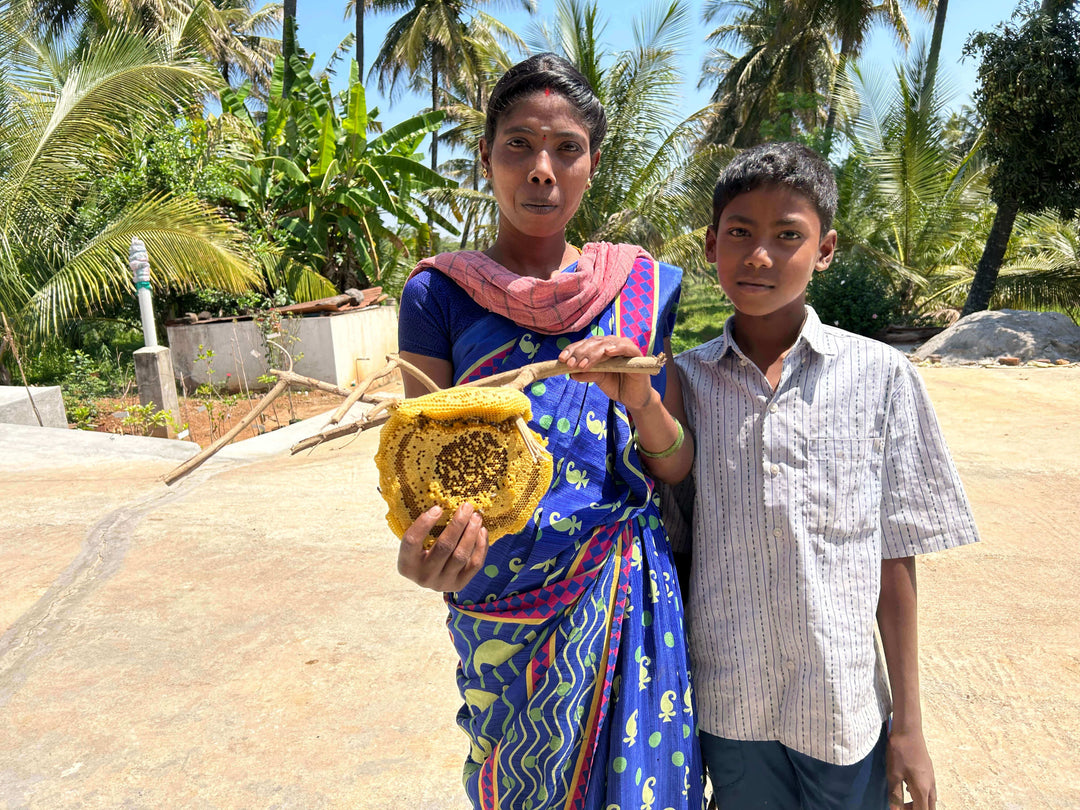
Equally important is how these cows live. At farms producing genuine organic ghee in India, desi cows are:
- Allowed to graze freely on natural pasture — no confined, factory-style milking
- Fed seasonal, natural fodder without synthetic hormones or growth agents
- Milked only after the calf has fed — a practice rooted in both ethics and Ayurveda
- Kept free from antibiotics and chemical supplements
This isn't just compassionate farming — it directly shapes the nutritional quality of the milk, and therefore of every jar of ghee that follows.
The Traditional Bilona Process: Why Method Matters

The word bilona refers to the traditional wooden churner used in the Vedic method of ghee preparation. This is not a detail of packaging — it is the entire philosophy.
Step-by-Step: How Bilona Ghee Is Made
-
Fresh A2 milk is collected
Whole milk from desi cows is collected in the morning, handled without any processing or homogenisation.
-
Milk is gently heated and cultured
The milk is warmed and a natural culture (dahi starter) is added. It is then set overnight in an earthen pot to form thick, probiotic-rich curd.
-
Hand-churning at dawn
Early in the morning, the curd is churned using a bilona (wooden churner) in a rhythmic motion. This separates the butter — called makhan — from the buttermilk.
-
Makhan is collected and washed
The fresh butter is rinsed with cold water to remove residual buttermilk, ensuring only pure fat remains.
-
Slow-cooking to golden perfection
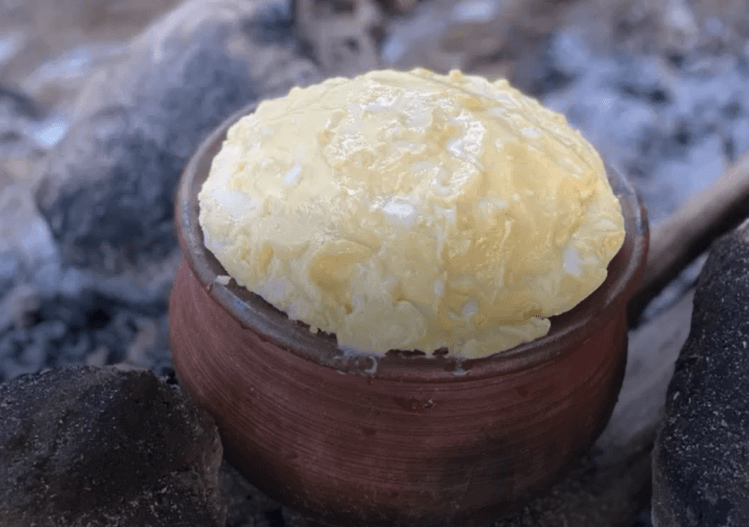
The makhan is simmered on a low flame — traditionally a wood fire — until all moisture evaporates and the milk solids settle. What remains is pure, grain-textured, deep golden A2 Bilona Ghee.
Why Curd-Based Is Different from Cream-Based
Most commercial ghee is made by skimming cream directly from milk — a faster, cheaper process. The bilona method starts from curd, not cream. This distinction matters enormously: the fermentation step adds probiotics, enhances digestibility, and preserves a more complete fatty acid profile. It is why bilona ghee has a distinctly nutty aroma and natural graininess that cream-based ghee simply cannot replicate.
What Makes A2 Bilona Ghee Nutritionally Special
The combination of A2 milk and the bilona process produces a ghee that is measurably different — not just in taste, but in composition.
- Butyric acid: A short-chain fatty acid that feeds and repairs the gut lining, supporting digestive health.
- Conjugated Linoleic Acid (CLA): A fatty acid found in grass-fed ruminant milk, linked to immune support.
- Fat-soluble vitamins A, D, E, K2: These are retained through the slow, low-heat bilona process in ways industrial methods cannot match.
- Omega-3 fatty acids: Present in meaningful amounts due to the natural grazing diet of desi cows.
In Ayurveda, this form of ghee is classified as a Rasayana — a deeply nourishing, rejuvenating substance that supports all seven body tissues (dhatus) and is described in Charaka Samhita as the finest among all fatty substances. You can explore the government's perspective on traditional ghee through the Ministry of AYUSH, Government of India.
A2 Bilona Ghee Benefits: What It Does for Your Body
Butyric acid nourishes especially for those sensitive to regular dairy.
Vitamins A and D, along with CLA, support the body's natural immune responses. Regular moderate intake complements a balanced diet.
Medium-chain fatty acids provide steady fuel for cognitive function. Ayurveda has long prescribed ghee for memory, clarity, and emotional balance.
Healthy dietary fats are essential precursors to hormone production. A2 ghee's fat profile supports thyroid and reproductive health when part of a wholesome diet.
Why the Source of Your Ghee Matters More Than the Label
What to look for in a trustworthy brand
- Breed transparency: Does the brand name the specific desi cow breed used? Gir, Sahiwal, and Tharparkar are all verifiable.
- Process clarity: Is the bilona process explicitly described — from curd to churning to slow cooking? Vague claims of "traditional" are not enough.
- Clean ingredient list: One ingredient only — A2 cow milk. Any additional entries warrant scrutiny.
- Certifications: Look for FSSAI licensing, organic certifications (India Organic / APEDA), and ideally third-party lab testing disclosures.
- Ethical farming practice: Are the cows free-grazing? Are they hormone-free? A brand that cares about the animal will tell you.
In a market crowded with labels claiming "pure desi ghee," the honest brands are those who show you the farm, name the cows, and explain every step. Transparency is the most reliable quality signal.
Why Svastya A2 Bilona Ghee Is Different
At Svastya Organic Farms, we believe ghee should be exactly what it has always been: whole, honest, and made with care. Nothing more, nothing less.
Farm-to-jar transparency — Our Gir cows graze freely on natural pasture. We welcome you to visit the farm and see the process firsthand.
Authentic bilona method, every batch — Curd is set overnight, churned at dawn, and slow-cooked on low heat. No industrial shortcuts, ever.
One ingredient, zero compromise — Our label reads: A2 cow milk. That's the full list. No additives, no preservatives, no colouring.
FSSAI certified, ethically produced — Every batch meets rigorous quality standards because we know what's at stake when someone trusts us with their family's food.
The Taste of Tradition Is Worth Protecting
A2 Bilona Ghee isn't just a premium product — it is an act of preservation. Every jar made the traditional way keeps alive a knowledge system refined over thousands of years of Indian farming and Ayurvedic wisdom.
When you choose ghee made from free-grazing desi cows, churned by hand from overnight curd, and slow-cooked without shortcuts, you're not just feeding your body well. You're choosing a food that knows where it came from — and has nothing to hide.
The next time you open a jar, let the deep gold colour, the nutty warmth, and the natural grain texture remind you: this is what ghee was always meant to be.
FAQs
Q1. What is the difference between A2 Bilona Ghee and regular ghee?
A2 Bilona Ghee is made from the milk of indigenous desi cows using the traditional curd-churning (bilona) method, whereas regular ghee is typically made from cream using industrial processes. This makes A2 Bilona Ghee more nutrient-rich, easier to digest, and closer to its Ayurvedic origins.Q2. Why is the bilona process important in making ghee?
The bilona process involves fermenting milk into curd, then hand-churning it to extract butter before slow-cooking it into ghee. This method enhances nutrient retention, improves digestibility, and preserves beneficial compounds like butyric acid that are often lost in commercial methods.Q3. Is A2 Bilona Ghee better for digestion?
Yes, A2 Bilona Ghee contains butyric acid, which supports gut health by nourishing the intestinal lining and aiding digestion. Many people who experience discomfort with regular dairy find A2 ghee gentler on their system.