Curcumin Ghee Benefits: Immunity, Joint Health & Daily Use Guide
In kitchens across India, two ingredients have held a place of quiet reverence for thousands of years — ghee and turmeric. One nourishes from within, the other heals. Together, they form one of Ayurveda's most celebrated wellness combinations. Today, this ancient pairing is finding a new name in modern wellness circles: curcumin ghee.

As more people turn toward natural, food-based health solutions, curcumin ghee is emerging as a daily ritual worth understanding — not as a fad, but as a return to something India has always known.
What is curcumin ghee?

Curcumin is the primary active compound in turmeric (Haldi) — the polyphenol responsible for its deep golden colour and its powerful anti-inflammatory and antioxidant properties. Pure turmeric root contains roughly 2–5% curcumin by weight.
It is made by infusing curcumin or whole turmeric into pure, traditionally prepared ghee. In Ayurveda, this blend is known as Haridra Ghrita — a classical preparation used for centuries to support immunity, reduce inflammation, and nourish the body's deep tissues (dhatus).
The beauty of this combination lies in a simple truth: curcumin is fat-soluble. Without fat, your body absorbs very little of it. Ghee acts as the perfect carrier — enhancing bioavailability and allowing curcumin to reach cells where it matters most.
How curcumin ghee is made
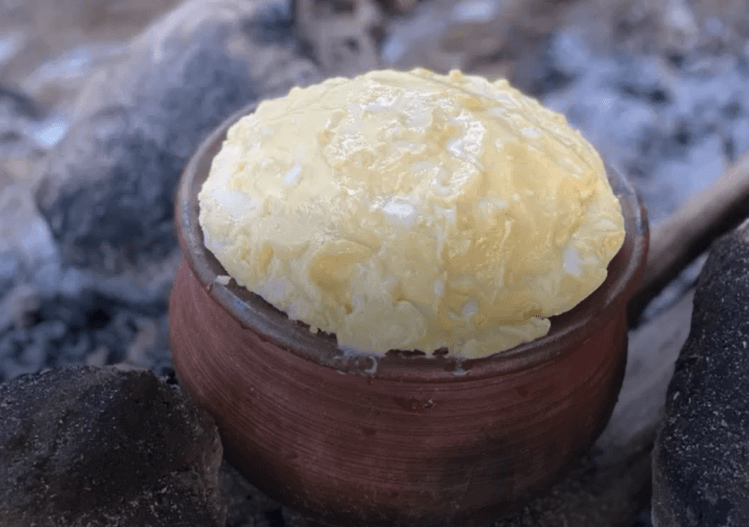
Quality begins long before the infusion. At Svastya Organic Farms, this ghee starts with pure A2 milk from indigenous desi cows, cultured into curd, and hand-churned using the traditional bilona method — the slow, wooden-churner process that preserves naturally occurring vitamins, butyric acid, and healthy fatty acids.
- Step 1 — Culturing: Fresh A2 milk is set overnight into thick curd using a natural starter.
- Step 2 — Bilona churning: The curd is hand-churned with a wooden bilona to separate butter from buttermilk.
- Step 3 — Slow heating: The butter is gently simmered on a wood fire until pure ghee separates — no preservatives, no additives.
- Step 4 — Curcumin infusion: High-quality turmeric or curcumin extract is carefully blended into the warm ghee in precise ratios.
Curcumin ghee benefits for your health
The benefits of this ghee span multiple dimensions of health — and they work together, not in isolation.
1. Immunity support
- Curcumin is a well-studied immuno-modulator — it helps regulate the body's immune response rather than simply stimulating it.
- Ghee provides fat-soluble Vitamins A, D, E, and K2 — all essential to immune system function and cellular defence.
- Together, they offer layered, natural immunity support particularly valuable through seasonal changes and periods of physical stress.
2. Joint health and anti-inflammatory properties
- Curcumin inhibits inflammatory pathways (including COX-2 and NF-kB), which are linked to joint discomfort and chronic inflammation.
- Ghee's Omega-3 fatty acids complement this by lubricating joints and supporting connective tissue health.
- In Ayurveda, curcumin ghee is a classical recommendation for Vata and Ama imbalances — both associated with stiffness and joint issues.
3. Digestion and gut wellness
- Ghee's butyric acid nourishes the gut lining and supports a healthy microbiome.
- Curcumin has shown gut-protective properties, helping reduce intestinal irritation and supporting digestive ease.
- The combination stimulates digestive Agni (fire) without inflammation — a foundational principle of Ayurvedic nutrition.
4. Better nutrient absorption
- Curcumin is poorly absorbed on its own — studies show bioavailability as low as 1% when consumed without fat.
- Ghee dramatically improves this by acting as a lipid carrier, allowing curcumin to be absorbed through the intestinal wall efficiently.
- This fat-soluble synergy is precisely why traditional Ayurveda always combined turmeric with ghee — long before clinical research confirmed it.
How to use curcumin ghee daily
The most effective wellness habits are the ones that fit naturally into your day. Here are practical, everyday ways to include curcumin ghee in your routine:
- Golden milk: Stir 1 tsp into warm milk with a pinch of black pepper (which enhances curcumin absorption further) for a calming evening tonic.
- Over rice or rotis: A simple drizzle at the table adds both flavour and nourishment — the traditional way most Indian households already use ghee.
- In soups and dals: Add as a finishing touch to lentil soups, vegetable curries, or khichdi for daily gut and joint support.
- Morning ritual: 1 tsp in warm water on an empty stomach — a gentle Ayurvedic practice to activate digestion and reduce morning stiffness.
- Suggested daily amount: 1–2 teaspoons per day for general wellness. Consult an Ayurvedic practitioner for personalised guidance.
Who can benefit from curcumin ghee?
Curcumin ghee is not a specialised supplement for a specific condition — it is a whole-food wellness food suitable for most people.
- Families: A daily nutritional upgrade for children and adults alike — especially when replacing refined oils in cooking.
- Elderly individuals: Particularly beneficial for joint lubrication, morning stiffness, and digestive ease.
- Working professionals: Supports mental clarity, sustained energy, and immune resilience during demanding schedules.
- Fitness-conscious individuals: Anti-inflammatory support for muscle recovery and joint care after physical activity.
- Anyone seeking natural wellness: A clean, food-based alternative to synthetic supplements for daily vitality.
→ Explore Svastya Curcumin Ghee
Why traditional preparation matters
The difference between industrial and artisanal
Most ghee available in supermarkets today is produced using centrifuge machines from A1 hybrid cow milk — a fast, cost-efficient process that loses much of ghee's natural nutritional complexity. Industrial turmeric ghee products often use synthetic curcumin extracts added as an afterthought.
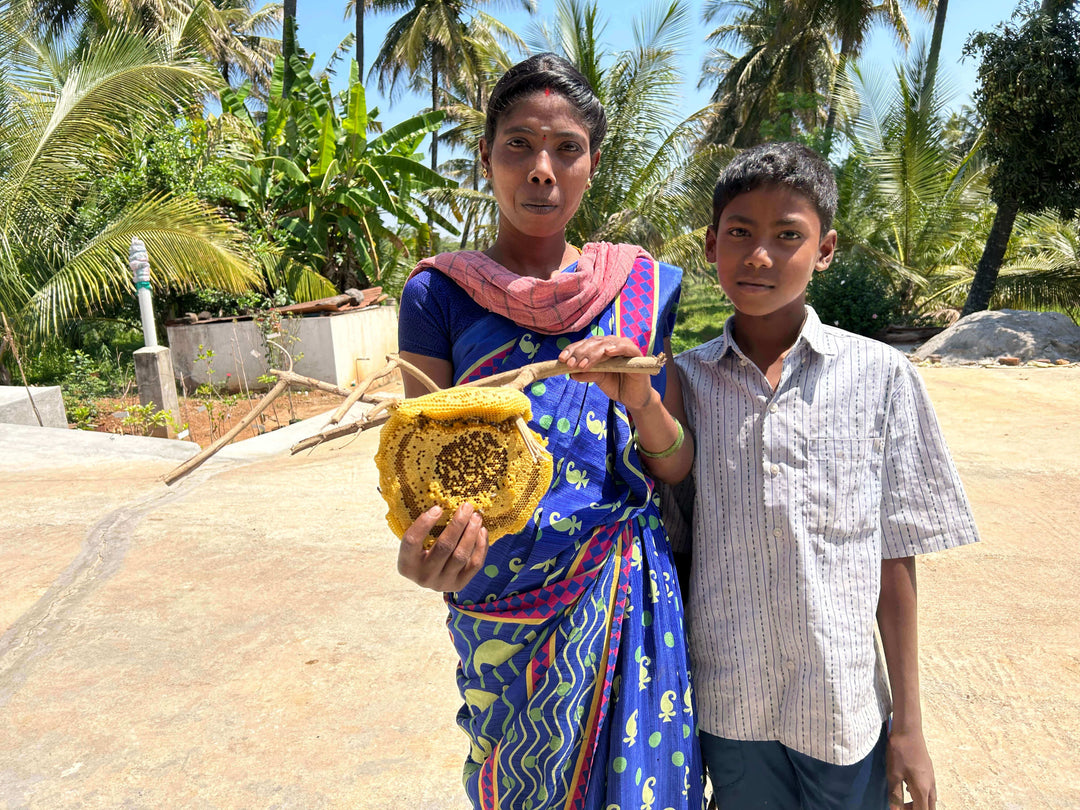
At Svastya Organic Farms, we work with women-led farming communities who raise indigenous desi cows with care and without chemicals. Every batch of our curcumin ghee is bilona-churned, slow-heated, and hand-crafted — because the method is inseparable from the medicine.

→ Meet the women farmers behind Svastya
Curcumin ghee is not a new discovery — it is an old truth, returned. When you choose traditional, you choose integrity over convenience. One teaspoon at a time, you are participating in something much older than wellness trends. You are participating in healing.