What is Cultured Ghee? Benefits, Process & Why It's Better for Gut Health
In an age of ultra-processed foods and gut-health supplements, one ancient ingredient has quietly stood the test of time — cultured ghee. Long before probiotics came in capsules, Indian grandmothers were fermenting milk overnight, hand-churning butter at dawn, and slow-cooking it into liquid gold that healed from the inside out.
But what exactly is cultured ghee, and why are nutritionists, Ayurvedic practitioners, and food lovers rediscovering it today? Let's explore.

What is Cultured Ghee?
Cultured ghee is made from curd (fermented yogurt), not from direct cream. Fresh A2 milk is first set into curd using a natural starter culture, then hand-churned using the traditional bilona method to extract butter, which is then slow-cooked to yield ghee.
The key difference? The fermentation step. When milk is cultured into curd before churning, it develops a rich array of beneficial compounds — including natural probiotics, short-chain fatty acids, and fat-soluble vitamins — that regular ghee simply cannot match.
In Ayurveda, this is called Takra Navneet Ghrita — ghee made from the butter of churned curd — and it has been prescribed for centuries to support digestion, strengthen agni (digestive fire), and calm the gut.
How Cultured Ghee is Made: The Traditional Bilona Process
The bilona process is a labour of love — slow, intentional, and deeply rooted in Indian village tradition. Here's how it works, step by step:
-
Fresh A2 milk from indigenous cow breeds (like Gir or Sahiwal) is collected and gently boiled.
-
The milk is cultured into curd overnight using a small spoonful of the previous day's curd as a natural starter.
-
The curd is hand-churned using a traditional wooden bilona (churner), which separates butter from buttermilk using a two-directional motion — clockwise and anticlockwise.
-
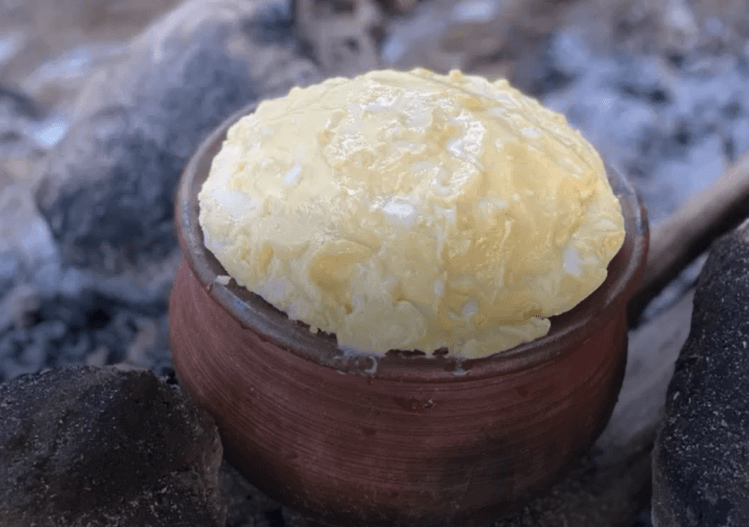
The freshly extracted white butter is collected and slow-cooked on a low flame until it transforms into fragrant, golden ghee.
-
The ghee is strained and poured into clean jars — no preservatives, no additives, nothing artificial.

This entire process takes 24–48 hours from milk to ghee. It takes roughly 25–30 litres of milk to make just one litre of cultured ghee — which is why it is rarer, richer, and far more nourishing than commercial alternatives.
Cultured Ghee vs Regular Ghee: What's the Real Difference?
Most ghee sold today is made directly from cream — a shortcut that speeds up production but strips away much of the nutritional depth that makes traditional ghee special.
- Made from direct cream
- No fermentation step
- Lower butyrate content
- Fewer bioavailable nutrients
- Industrial or semi-industrial process
- Less complex flavour
- Made from fermented curd
- Fermentation enriches nutrients
- Higher butyrate & CLA content
- Better bioavailability
- Slow, hand-crafted process
- Nutty, deep, complex aroma
Benefits of Cultured Ghee for Gut Health & Beyond
The traditional bilona ghee is not a trend — it is a time-tested superfood whose benefits are now being confirmed by modern science.
Supports Gut Health & Heals the Gut Lining
Cultured ghee is one of the richest natural sources of butyric acid (butyrate) — a short-chain fatty acid that literally feeds the cells of the colon. Butyrate reduces gut inflammation, helps repair a leaky gut lining, and supports a healthy microbiome. Research published in journals on gastrointestinal nutrition links dietary butyrate to reduced symptoms of IBS, Crohn's disease, and ulcerative colitis.
Improves Digestion
In Ayurveda, ghee is considered the most effective food for kindling digestive fire (agni). Cultured ghee stimulates the secretion of digestive enzymes, eases constipation, and lubricates the intestinal tract — making it ideal for those with slow or sensitive digestion.
Enhances Nutrient Absorption
Fat-soluble vitamins like A, D, E, and K need fat to be absorbed properly. Cultured ghee, being a pure, stable fat with a high smoke point, acts as an ideal carrier for these vitamins — especially when cooked with vegetables, dals, or rice.
Boosts Immunity
- Rich in Conjugated Linoleic Acid (CLA), an anti-inflammatory fat linked to improved immune response
- Contains fat-soluble vitamins A and D that are key for immune cell function
- Butyrate has been shown to modulate immune activity in the gut
- Regular consumption supports the gut-immune axis, where 70% of immune activity originates.

Why Modern Diets Are Missing This Ancient Food
Somewhere in the last 50 years, we were told to fear fat. Butter, ghee, and dairy were replaced by refined vegetable oils and hydrogenated spreads — foods that were cheaper to make but ultimately far harder on the gut.
Commercial ghee today is produced at scale, often from pasteurised cream of mixed-breed cows, in processes that take hours rather than days. The nutritional and microbial richness of traditionally cultured ghee cannot survive these shortcuts.
Meanwhile, gut-related conditions — IBS, bloating, food intolerances, and inflammatory bowel disorders — have risen sharply. The food our ancestors ate daily for gut health has been quietly replaced by pills, powders, and probiotics.
Reclaiming cultured ghee in our kitchens is, in many ways, a return to what always worked. Read about Ayurvedic perspectives on ghee (NCBI).
Why Svastya's Cultured Ghee is Different
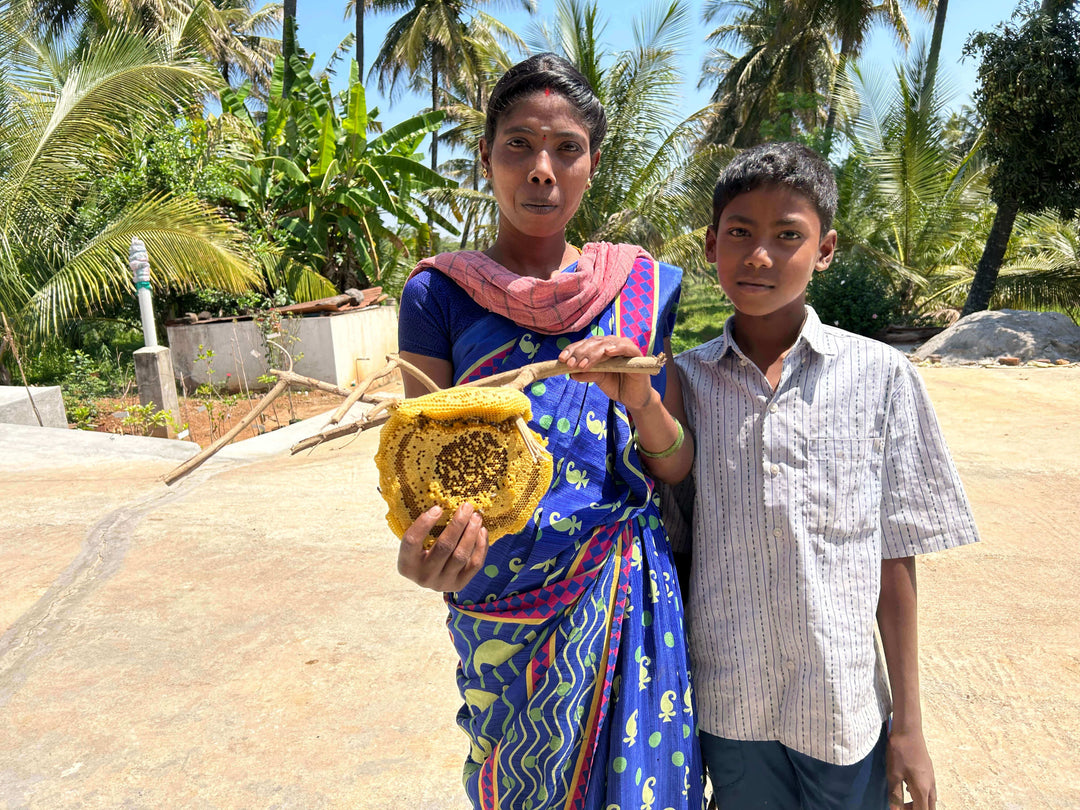
At Svastya Organic Farms, every jar of cultured ghee begins with a single phone call to our farmers — many of them women from rural communities who have been making ghee this way for generations. We source A2 milk exclusively from indigenous cow breeds that graze on open, chemical-free pastures.
Our ghee is made in small batches using the traditional bilona process — hand-churned, slow-cooked, and poured without any additives or preservatives. Just the same ghee that nourished Indian families for centuries.
We believe that real food should come with a story — of the cow, the farmer, the land, and the hands that made it.

FAQs
1. Is cultured ghee better than regular ghee?
Yes — cultured ghee is generally considered superior because it goes through a fermentation step before churning. This produces higher levels of butyric acid, CLA, and fat-soluble vitamins compared to cream-based regular ghee. The bilona hand-churning process also preserves nutrients that industrial processing can damage. If gut health, digestion, and nutrient density matter to you, cultured A2 ghee is the better choice.
2. Can lactose intolerant people consume cultured ghee?
In most cases, yes. The traditional ghee-making process removes virtually all milk solids and casein during the cooking stage. Lactose — the sugar in milk that many people cannot digest — is present in negligible amounts in properly made ghee. Additionally, the fermentation of curd before churning further breaks down lactose. Many lactose-intolerant individuals tolerate high-quality bilona ghee well, though it's always wise to start with a small amount and consult a healthcare professional if unsure.
3. How do I identify real cultured ghee?