Wild Forest Raw Honey: Traditional Ways to Use Honey in Festive Food & Everyday Cooking
Lift a spoon of wild forest raw honey and watch it fall. It does not rush. It moves like a thread of dark gold, folding onto itself in the bowl, as if the forest has decided to slow you down for a moment.
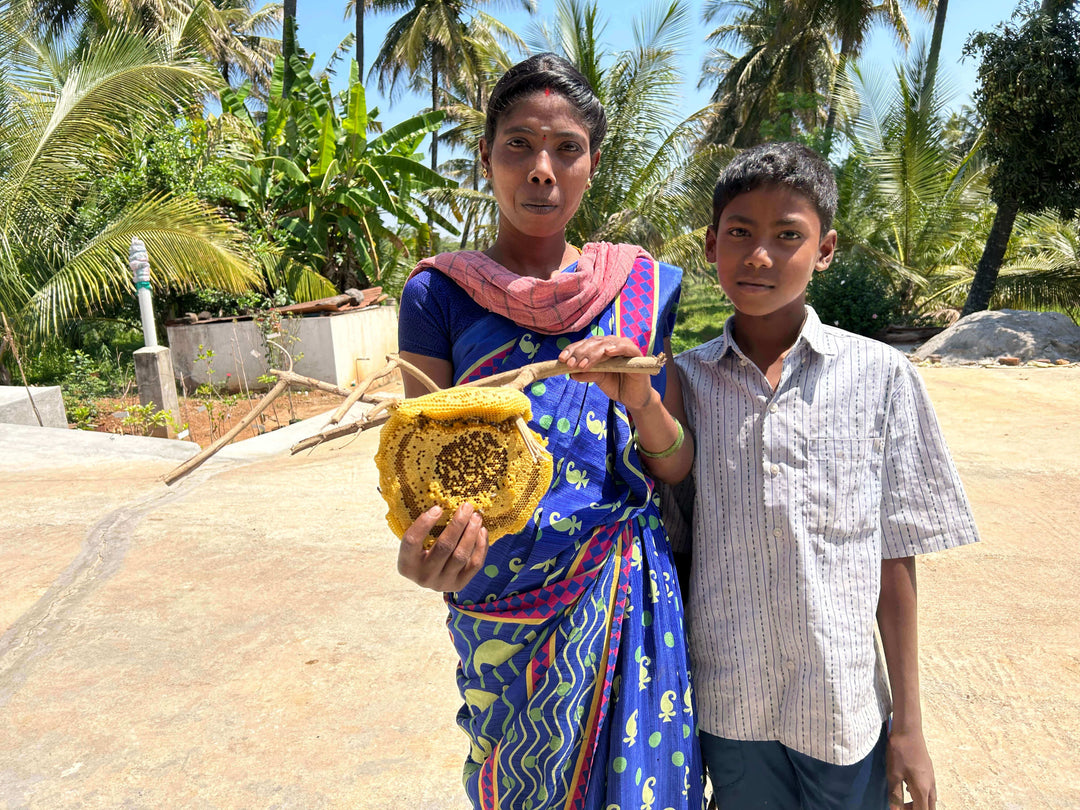
That patience is built into the honey. Wild bees collect nectar from forest blossoms, and honey hunters harvest it season by season from the Western Ghats. As Dussehra nears, raw forest honey deserves a place beside the ghee and jaggery on your festive shelf. Here is how it is made, how it differs from processed honey, and how to use it well.
What is wild forest raw honey?

Raw forest honey is honey collected from wild bee colonies in forests and kept as close to its natural state as possible, without heavy heating or ultra-filtration. Its colour, aroma and flavour change with the season and the flowers in bloom.
How raw forest honey differs from processed honey
| Feature | Raw forest honey | Heavily processed honey |
|---|---|---|
| Source | Wild forest colonies | Often farmed hives |
| Processing | Minimal straining | Often heated and ultra-filtered |
| Flavour | Varies by season and flowers | Uniform and mild |
| Texture | May thicken or crystallise | Stays clear and runny |
None of this makes one right and the other wrong. It simply explains why forest honey tastes like a place and a season, rather than a recipe. To read more about the substance itself, see this overview of honey.
Honey in Dussehra traditions
Honey has a quiet but important role in Indian ritual. It is one of the five ingredients in panchamrita, the sacred mixture of milk, curd, honey, ghee and sugar or jaggery offered during many pujas. During Navaratri, families who prepare panchamrita for the goddess often distribute it as prasadam afterwards, so that everyone shares the offering.
That is why raw forest honey fits so naturally into a traditional Dussehra kitchen. It is an ingredient the festival already knows.
Traditional ways to use raw forest honey in festive food
- Panchamrita. Blend honey with milk, curd, ghee and a little jaggery for a simple offering.
- Over payasam. Once the payasam has cooled slightly, a thin drizzle adds a floral note. Try it with our Karuppu Kavuni Payasam.
- With fruit and nuts. A festive plate of banana, dates and almonds with honey is a light way to end a meal.
- Warm drinks. Stir a spoon into warm (not boiling) water with lemon or ginger.
- On dosa or millet rotis. A little honey with ghee makes a children's favourite.
Everyday tips for using raw forest honey
- Do not boil it. High heat changes the aroma, so add honey after cooking.
- Use a dry spoon. Moisture can shorten its shelf life.
- Expect crystals. If honey thickens, place the jar in warm water for a few minutes.
- Skip it for infants. Honey is not recommended for children under one year of age.
Explore our wild forest raw honey collection to see the season-wise and bee-type varieties. If you are curious about how we work with rural communities, read about our women-driven rural organic farms.
A slow sweetness worth honouring
Honey teaches you to wait. There is no shortcut to a bee colony's harvest, and no fast lane for a forest that blooms on its own schedule. When the honey finally reaches a kitchen, it carries that unhurried rhythm with it.
Dussehra is also about patience of a different kind. Nine nights of preparation lead up to a tenth day of celebration. Those nights are filled with small acts, lighting a lamp, preparing an offering, calling a neighbour over. Honey belongs to those small acts.
Imagine a steel cup of panchamrita passed from hand to hand, each person taking a spoonful. The taste is simple, but the moment is not. It is a reminder that sweetness, at its best, is shared.
This Dussehra, let a spoon of raw forest honey remind you where good things come from, and how long they take to reach us.
About Svastya's Wild Forest Raw Honey
Svastya's Wild Forest Raw Honey is harvested from wild bee colonies across the Western Ghats, not farmed hives, so its colour, thickness and flavour shift with the season and the forest in bloom. It reaches you minimally processed, without the heavy heating and filtering that strip most commercial honey of its character. That is why it may crystallise from time to time, and why every jar tastes a little different from the last. It is honey the way the forest made it, not the way a factory standardised it.
Frequently Asked Questions
1. What is the difference between raw forest honey and regular honey?
Raw forest honey comes from wild colonies and is minimally processed. Its taste varies by season, unlike uniform commercial honey.
2. Why does raw honey crystallise?
Crystallisation is a natural process. Warm the jar gently in a bowl of warm water and it will soften.
3. Can I cook with raw forest honey?
It is best added after cooking or to warm dishes, since high heat alters its aroma.
4. Is raw honey suitable for babies?
No. Honey is not recommended for children under one year of age.