Why Pure Virgin Castor Oil Feels Thicker Than Commercial Castor Oils
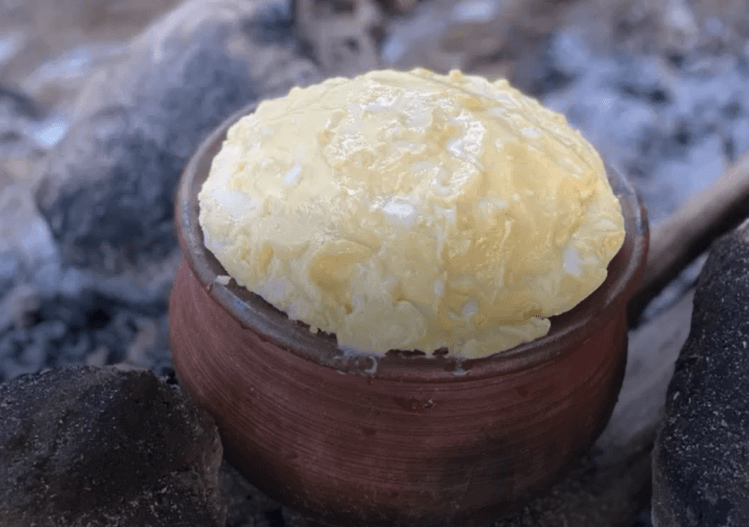
Many first-time buyers of virgin castor oil are surprised when they pour it. It moves slowly, coats the skin richly, and feels very different from the lighter castor oils commonly available in stores.
That thickness often prompts a question: is something wrong with this oil? Has it gone bad? Is it too concentrated to use?
The answer is the opposite. The thickness of authentic virgin castor oil is one of the clearest signs that it has been minimally processed and is chemically intact. This article explains why, and what the science behind that viscosity means for your skin, hair, and health.
Why Castor Oil Is Naturally Thick

All castor oil, regardless of how it is processed, is inherently thick. This is not a manufacturing artefact — it is a chemical property. Castor oil has one of the highest viscosities of any plant-derived oil used in personal care and wellness applications.
This viscosity comes from the oil's unusual molecular structure. Castor oil contains a very high concentration of a fatty acid called ricinoleic acid — typically around 85 to 95 percent of its total fatty acid composition.
Ricinoleic acid is a hydroxylated fatty acid, meaning its molecules contain an extra hydroxyl group that other fatty acids do not have. This structural difference causes the molecules to interact strongly with one another, creating a more viscous, cohesive liquid than you would find in oils like coconut, sesame, or almond.
In short, castor oil is thick because of its chemistry — not because of how it was made. The question is whether that thickness has been preserved or engineered away.
How Traditional Extraction Preserves the Natural Texture of Virgin Castor Oil

Authentic virgin castor oil is produced by cold pressing castor seeds without applying external heat above the natural friction temperature of the press. No solvents are introduced. No chemical pre-treatment is applied to the seeds.
The result is a crude, unrefined oil that retains its natural colour (which ranges from pale straw yellow to a light golden tone depending on the seed quality and region), its characteristic mild odour, and — critically — its full natural viscosity.
Because nothing has been added or removed beyond simple mechanical pressing, the ricinoleic acid content remains high, the molecular structure of the oil is intact, and the viscosity reflects what the castor seed naturally contains.
This is exactly what you feel when you open a bottle of true virgin castor oil.
What Refining Does to Castor Oil's Texture
Commercial castor oils undergo a refining process designed to make them more visually appealing and shelf-stable at scale. This typically involves three stages: degumming, bleaching, and deodorising.
Degumming removes phospholipids and other natural compounds. Bleaching uses activated clay or charcoal to remove colour pigments. Deodorising involves heating the oil under vacuum to strip volatile aromatic compounds.
Each stage removes or alters something from the oil's natural composition. The refined castor oil that results is paler, nearly odourless, and — notably — somewhat less viscous than the unrefined version. Some of the natural compounds that contribute to the oil's thickness and cohesion have been partially degraded or removed.
This thinner texture is often mistaken for a quality marker. It is not. It is simply the result of more processing.
Why Thinner Is Not Always Better
In the personal care and wellness world, there is a cultural assumption that lighter oils are superior — they absorb faster, feel less greasy, and seem more modern. This is a preference, not a nutritional or functional standard.
For many applications, the thickness of virgin castor oil is precisely the point. It creates a film on the skin that holds moisture in. It coats the hair shaft and scalp with enough density to provide sustained nourishment. Its slower absorption means it stays where you apply it rather than disappearing quickly.
For applications where faster absorption is needed, virgin castor oil can be blended with a lighter carrier oil such as cold-pressed sesame or coconut oil. This is standard practice in traditional hair and skin preparations — blending was never a sign of inferior quality. It was adaptive formulation.
How to Evaluate the Quality of Castor Oil
When choosing between castor oil products, the following indicators can help you assess what you are actually buying.
• Colour: Unrefined virgin castor oil is typically a light golden to straw yellow. Water-clear castor oil has usually been heavily refined.
• Viscosity: Authentic virgin castor oil pours slowly and feels rich. If your castor oil is very thin, it has likely been processed to reduce viscosity.
• Smell: Cold-pressed virgin castor oil has a mild, slightly earthy or nutty scent. Heavily refined versions are nearly odourless.
• Label information: Look for cold-pressed or expeller-pressed, unrefined or virgin, and the absence of solvent extraction disclosures. Organic certification adds a further layer of assurance.
Why Svastya Chooses Traditional Purity Over Mass Production
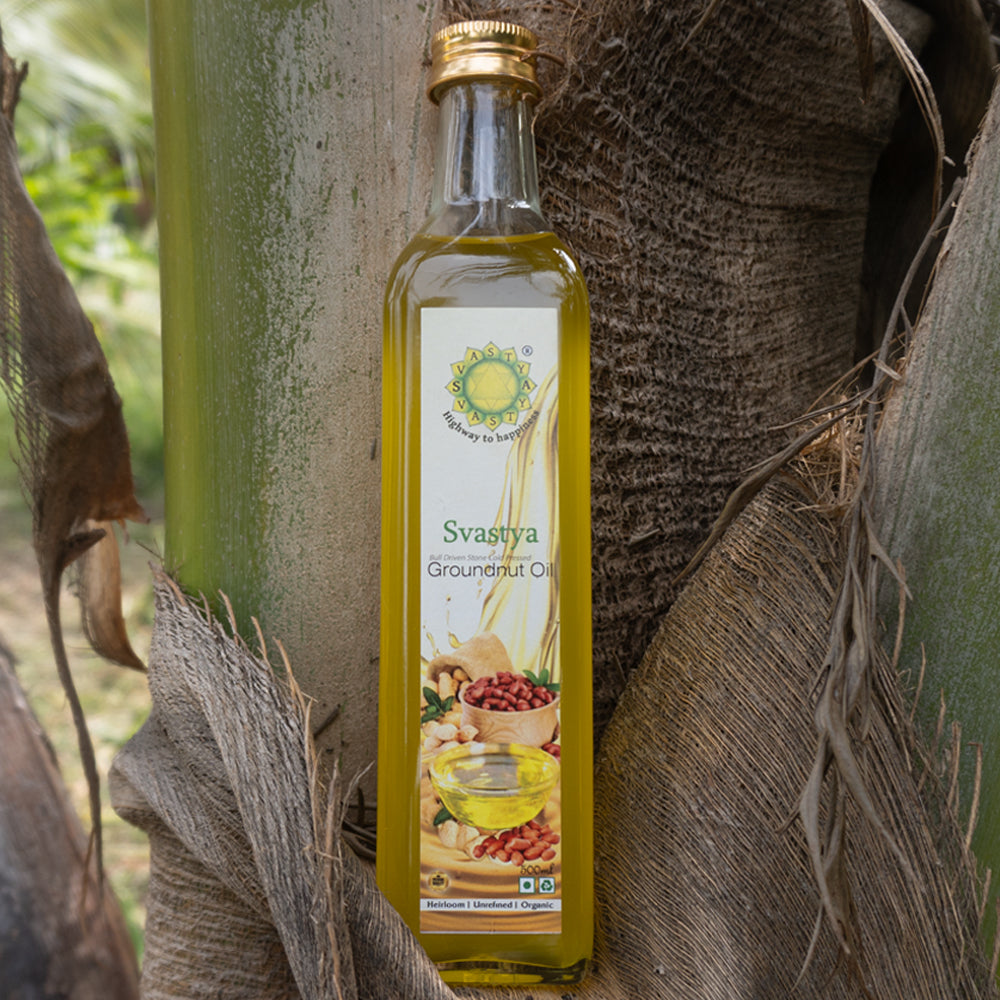
At Svastya Organic Farms, our approach to virgin castor oil begins with the seed. We source organically grown castor seeds from certified farms where no synthetic pesticides or chemical fertilisers are used. The seed quality affects everything that follows.

Our extraction is traditional cold pressing, done in small batches. We do not use hexane or any solvent at any stage. The oil is not bleached, deodorised, or subjected to any refinement process that would alter its natural composition.
What we bottle is the oil as it comes from the seed — intact, unaltered, and at its natural viscosity. That thickness is a feature of our process, not a problem to be corrected.
We believe the best castor oil does not need to be made to look like something it is not. Its quality is visible in its character.
Frequently Asked Questions
1. Is thick castor oil safe to apply directly to the skin?
Yes. Authentic virgin castor oil is safe for direct application on most skin types. Its thickness means a small amount goes a long way. If you find it too dense for your preference, blend it with a lighter carrier oil such as cold-pressed sesame or coconut oil. Always patch test before using on sensitive skin.
2. Why does virgin castor oil feel different from the castor oil I used before?
If you have previously used a refined or commercial castor oil, virgin castor oil will feel noticeably thicker and may have a subtle scent. These differences reflect the absence of refining. The oil's natural composition is intact. It is not a defect — it is the baseline character of minimally processed castor oil.
3. Can I use virgin castor oil for oil pulling or internal use?
Food-grade castor oil has specific use cases in traditional wellness practices, and virgin cold-pressed versions are generally considered of higher quality for such applications. However, castor oil intended for internal use should always be verified as food-grade and used under appropriate guidance. Our castor oil is primarily positioned for external wellness use.
4. How long does a bottle of Svastya Virgin Castor Oil last?
With regular use, a 100ml bottle typically lasts one to two months for hair and skin applications combined. The oil's high viscosity means small amounts are sufficient. Store in a cool, dark location with the cap sealed tightly to maintain quality across the shelf life period stated on the label.