Why Low RPM Matters: The Science Behind Bull Driven Oil Extraction
Modern food production has optimised almost everything for speed. Products move faster, yields increase, and shelves stay full. But in oil extraction, speed comes with a hidden cost — nutrients. Traditional wooden ghani presses, powered by the slow and steady walk of a bullock, operate at approximately 5–20 revolutions per minute. This naturally slow movement generates minimal heat, preserving the seed’s natural nutrients, aroma, colour, and flavour. What modern food science now explains through chemistry and thermal physics is something traditional Indian oil makers understood centuries ago: slower extraction protects the integrity of oil.This is the science behind low RPM oil — and why bull driven extraction remains one of the most intelligent methods of producing cold pressed oils.
Explore Svastya Products--
→ Cold Pressed Oils
→ Bull Driven Oils
→ A2 Ghee
What Does Low RPM Mean in Oil Extraction?
RPM stands for revolutions per minute — the number of times a press rotates in sixty seconds. In oil extraction, RPM directly affects heat generation.
When seeds are pressed, friction naturally occurs between the pressing surfaces and the seeds. Faster rotation creates more friction, and more friction creates more heat. In industrial expeller systems operating at 80–200+ RPM, temperatures can rise between 60°C and 120°C or more. Refined oil processing stages often expose oils to temperatures above 200°C.
By contrast, a traditional wooden ghani operating at low RPM usually keeps oil temperatures between 28°C and 42°C — close to natural ambient conditions.
That temperature difference matters because many valuable compounds in oils are heat-sensitive. Vitamin E, polyphenols, lignans, antioxidants, and essential fatty acids begin degrading when exposed to excessive heat.
How Bull Driven Oil Extraction Naturally Operates at Low RPM

The wooden ghani keeps the RPM low through its power source itself — the bullock.
A bullock walks at a steady natural pace. It cannot rotate rapidly like industrial machinery. This slow circular movement creates gentle extraction without overheating the seeds.
The wooden construction of the ghani adds another advantage. Unlike steel or metal, wood absorbs and disperses friction heat rather than transferring it directly into the oil. The entire system works as a natural temperature regulator without requiring cooling systems or chemical intervention.
This is why traditional ghani extraction preserves the oil’s authentic aroma, texture, colour, and nutritional value so effectively.
Why High RPM Processing Can Affect Oil Quality
Industrial oil extraction prioritises efficiency and high output. But high-speed processing exposes oils to temperatures that gradually alter their natural composition.
During refining, oils commonly undergo:
- high-speed pressing
- chemical solvent extraction
- bleaching
- deodorising
These stages remove the oil’s natural aroma, flavour, and colour to create a neutral and shelf-stable product. However, they also reduce many naturally occurring nutrients and antioxidants present in the seed.
Low RPM extraction avoids these aggressive processes entirely. The oil remains minimally processed, naturally aromatic, and nutritionally intact.
Heat is not the enemy of oil — excessive, unnecessary heat is. The ghani generates almost none.
Benefits of Low RPM Bull Driven Oils

🌿 Better Nutrient Retention
Low heat extraction helps preserve naturally occurring vitamins, antioxidants, and essential fatty acids.
👃 Natural Aroma and Flavour
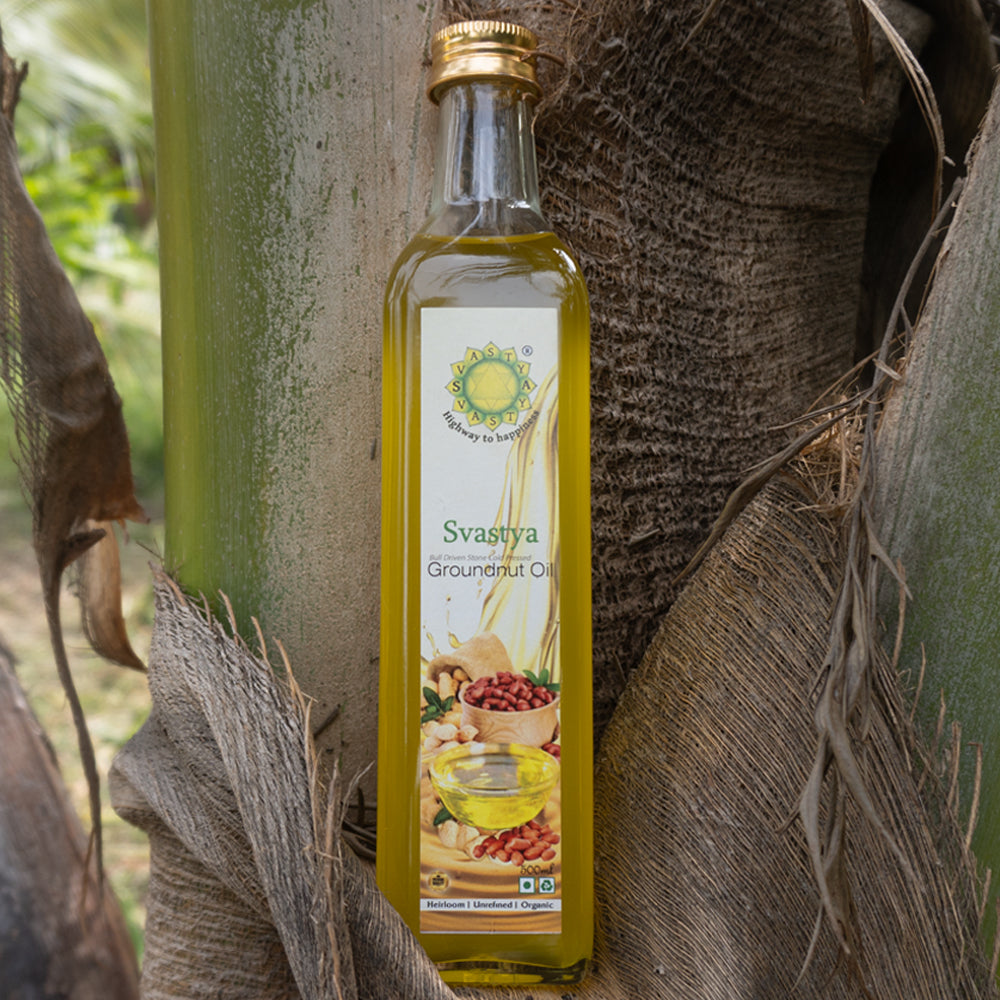
Authentic sesame, mustard, groundnut, and coconut oils retain their characteristic fragrance and taste because delicate aromatic compounds remain intact.
🚫 No Chemical Processing
Bull driven extraction does not require chemical solvents, bleaching agents, or deodorising treatments.
🫙 Natural Stability
Because natural antioxidants remain present, the oil retains better natural oxidation resistance.
🍛 Authentic Indian Cooking Experience
Traditional Indian cooking evolved around naturally aromatic oils. Low RPM oils enhance flavour in ways highly refined oils cannot.
🌱 Sustainable and Traditional
Bull driven extraction is low-energy, community-centred, and aligned with sustainable agricultural traditions.
The Science Behind Traditional Oil Extraction
Modern food science increasingly validates traditional extraction wisdom. Heat-sensitive compounds such as tocopherols (Vitamin E), polyphenols, lignans, phytosterols, and natural pigments survive significantly better at lower temperatures.
In low RPM ghani extraction:
- nutrients remain structurally intact
- natural antioxidants are preserved
- essential fatty acids experience minimal oxidation
- flavour compounds stay present
Industrial refining, especially at high temperatures, reduces many of these naturally occurring components.
Traditional Indian oil makers may not have used scientific terminology, but they created a system that protected oil quality with remarkable precision.
How to Identify Authentic Low RPM Cold Pressed Oil
1. Aroma Matters
Authentic cold pressed oil has a distinct natural fragrance. If an oil smells neutral or odourless, it has likely been deodorised.
2. Natural Colour is Important
Golden, amber, or naturally rich colours indicate minimal processing and preserved nutrients.
3. Slight Sediment is Normal
A small amount of cloudiness or fine sediment reflects minimal filtration and authentic extraction.
4. Check Label Transparency
Look for terms like:
- wooden ghani pressed
- bull driven
- chekku oil
- low RPM extraction
- cold pressed without solvents
5. Source Traceability
Authentic producers openly share sourcing and extraction details.
Why Consumers Are Returning to Traditional Oils
Consumers today are becoming more conscious about food quality and processing methods. The return to low RPM oils reflects a growing understanding that slower, minimally processed foods often preserve more natural nutrition and authenticity.
Traditional Indian wellness systems like Ayurveda have long valued foods prepared gently and naturally. Low RPM extraction aligns perfectly with this philosophy.
The Slowest Press Makes the Best Oil
The science behind this concept is ultimately the science of preservation. Slower extraction protects the seed’s natural nutrition, flavour, and integrity without chemical interference or excessive heat.
The wooden ghani is not outdated technology — it is a remarkably intelligent system designed around balance, patience, and nourishment.
When you choose bull driven cold pressed oil, you choose oil that remains closest to its natural form from seed to bottle.
The ghani is slow by design — and that slowness is precisely what makes it extraordinary.
Frequently Asked Questions
1. What is low RPM oil extraction?
Low RPM oil extraction refers to pressing seeds at very slow rotational speeds — as in traditional wooden ghani presses powered by bullocks — typically between 5 and 20 revolutions per minute. Because slow rotation generates almost no friction-based heat, the oil temperature stays at ambient levels (25–45°C) throughout the entire process. This preserves heat-sensitive nutrients like Vitamin E, polyphenols, lignans, and essential fatty acids that are significantly degraded at the higher speeds and temperatures of industrial extraction.
2. Why does low RPM preserve nutrients better than high RPM?
The mechanism is friction. Higher rotational speed means more friction between the press and the seeds per unit of time, generating more heat. Many beneficial compounds in seeds — Vitamin E, polyphenols, lignans, and essential fatty acids — begin to degrade or oxidise at temperatures above 40–50°C. Low RPM extraction keeps temperatures well below this threshold throughout the entire process, allowing all these nutrients to travel from seed to bottle completely intact.
3. Is low RPM cold pressed oil better for Indian cooking?
Yes — for multiple reasons. Low RPM cold pressed oils retain the natural flavours, aromas, and nutrients that traditional Indian cooking was built around. The authentic taste of sesame, groundnut, mustard, and coconut oils enhances curries, chutneys, and rice dishes in ways that industrially refined, deodorised oils cannot replicate. They are also completely free of chemical residues, making them a purer and more wholesome choice for daily family cooking.