Bull Driven Coconut Oil Benefits: Daily Use, Cooking and Skin Care Guide
There is a particular memory that lives in many Indian homes — the scent of warm coconut oil, a grandmother's hands working it gently into hair on a Sunday morning, or the soft sizzle of it hitting a hot pan and filling the kitchen with something comforting and unmistakably real. For centuries, bull driven coconut oil was not a wellness trend. It was simply how oil was made. Whole coconuts, a wooden ghani press, the patient movement of a bullock, and the slow, generous release of pure oil — no chemicals, no shortcuts, no compromise.
Somewhere along the way, industrial processing replaced this tradition. Refined coconut oil — cheap, clear, and odourless — took over our kitchens, stripping away the very qualities that made coconut oil so valuable in the first place.
This is a guide to reclaiming that original purity. Whether you are exploring bull driven coconut oil for daily wellness, thoughtful cooking, or a natural skin care ritual, this article is your complete, honest reference.
What Is Bull Driven Coconut Oil?

Bull driven coconut oil is extracted using a traditional Indian wooden press — the ghani or chekku — powered not by electricity or motors, but by the steady, circular walk of a bullock harnessed to a long wooden beam.
Dried coconut kernels (copra) or fresh coconut meat are loaded into the wooden mortar. As the bullock walks its patient circles, the pestle rotates and applies slow, even pressure, gradually releasing the oil. The entire process happens at ambient temperatures — typically between 25°C and 40°C — which is the essence of what "cold pressed" truly means.
No external heat is applied. No chemical solvents are used. No bleaching or deodorising follows. The oil that flows out is exactly what the coconut was always meant to give: rich in medium-chain fatty acids, natural antioxidants, and the warm, characteristic fragrance that refined coconut oil has long forgotten how to carry.
In the ghani's slow revolution lies a philosophy — that the best things are not hurried, and that purity is always worth the patience it asks for.
Bull Driven Coconut Oil Benefits for Daily Use

Used across India for millennia, coconut oil holds a revered place in Ayurvedic tradition. Charaka Samhita and Ashtanga Hridayam both describe narikela taila (coconut oil) as deeply nourishing — snigdha (unctuous), balya (strengthening), and beneficial for the hair, skin, and digestive system.
Healthy Fats for Sustained Energy
Rich in medium-chain triglycerides (MCTs), traditional coconut oil is metabolised efficiently by the liver, providing clean, sustained energy without blood sugar spikes.
Supports Healthy Digestion
The lauric acid in unrefined coconut oil possesses natural antimicrobial properties that may help maintain a balanced gut environment and ease digestion.
Rich in Antioxidants
Cold pressed extraction preserves Vitamin E and polyphenols — natural antioxidants that protect cells from oxidative stress and support long-term wellness.
Metabolic Balance
Traditional use of coconut oil, particularly in South Indian diets, has long been associated with metabolic vitality — supported by its unique fatty acid composition.
Ayurvedic Daily Rituals
From oil pulling (kavala graha) to abhyanga (self-massage), bull driven coconut oil is ideally suited for traditional Ayurvedic daily self-care practices.
Chemical-Free Nourishment
Free from hexane residues, synthetic antioxidants, and bleaching agents — this is nourishment in its most natural, whole form.
Bull Driven Coconut Oil for Cooking — Flavour, Stability, Purity
Coconut oil is one of the most stable natural fats for cooking. Its high saturated fat content — primarily lauric acid — means it resists oxidation far better than most plant-based oils when exposed to heat. This quality, present in its purest form in bull driven coconut oil, makes it an excellent kitchen companion.

- Tadka & tempering: The natural aroma of cold pressed coconut oil deepens the flavour of mustard seeds, curry leaves, and dried chillies in South Indian recipes.
- Stir-fries & sautés: Stable at medium-high heat, making it suitable for vegetable dishes and stir-fried preparations without producing harmful oxidation byproducts.
- Traditional sweets & ladoos: Coconut oil's natural sweetness enhances the flavour of coconut-based sweets, puttu, and modak without any artificial richness.
- Rice & dal cooking: A small spoonful added to rice while cooking lends a gentle richness and separates grains naturally.
- Chapati & paratha: An alternative to ghee for those seeking a plant-based fat with authentic Indian flavour character.
Bull Driven Coconut Oil for Natural Skin and Hair Care

Long before the cosmetics industry existed, Indian women understood the transformative power of coconut oil. Passed down through generations as a staple of daily self-care, it was the original moisturiser, the original hair mask, and the original answer to dry, stressed skin.
Skin Care Benefits
Bull driven coconut oil, being cold pressed and unrefined, retains lauric acid — a medium-chain fatty acid known for its ability to penetrate the skin's surface effectively. It also carries natural Vitamin E, which supports skin elasticity and provides gentle antioxidant protection.
Applied as a post-bath body moisturiser on slightly damp skin, it absorbs gently and leaves skin soft without feeling heavy. For dry elbows, feet, or lips, a small amount applied regularly makes a notable difference. Those following Ayurvedic self-care traditions use it for abhyanga — the daily full-body oil massage that is considered one of the most grounding and nourishing morning rituals.
Hair Care Benefits
Research published in the Journal of Cosmetic Science found that coconut oil, unlike mineral oil or sunflower oil, is uniquely able to reduce protein loss in both undamaged and damaged hair. Its molecular structure allows it to penetrate the hair shaft rather than simply coating it — a quality that is preserved only in unrefined, traditionally extracted oil.
Used as a pre-wash hair oil 30–60 minutes before shampooing, it nourishes the scalp, softens the hair, and protects against mechanical damage during washing. Applied in small amounts to dry hair ends, it helps manage frizz and restore natural lustre — without a single synthetic ingredient.
Why Traditional Extraction Makes All the Difference
Not all coconut oil is created equal. The extraction method determines everything — what nutrients survive, what compounds are preserved, and what ultimately reaches your body and your skin.
- Extracted at ambient temperature — no heat damage
- No chemical solvents or hexane used
- Natural aroma, flavour, and colour preserved
- Full nutrient profile — Vitamin E, lauric acid, polyphenols intact
- Animal-powered — low carbon, low waste
- Supports traditional artisan communities
- Single-step, transparent process
- High heat (120–200°C) degrades fatty acids
- Hexane and chemical solvents used for maximum yield
- Bleaching strips natural colour and pigments
- Deodorising removes authentic aroma
- Multiple refining stages destroy nutrients
- High energy consumption and chemical waste
- Multi-step process with limited transparency
The difference is not subtle. It is the difference between oil that nourishes and oil that merely functions.
How to Identify Authentic Bull Driven Coconut Oil
As the demand for traditional cold pressed coconut oil grows, so too does the presence of products that use the language of tradition without the substance behind it. Here is how to know you have found the real thing.
- Aroma: Authentic bull driven coconut oil carries a warm, unmistakable scent of toasted coconut — gentle but present. Oil that has been deodorised has no meaningful aroma at all.
-
Colour: It should appear pale golden to cream when liquid, and pure white when solidified. Water-clear, perfectly transparent oil is a sign of heavy refining.
-
Texture & solidification: Traditional coconut oil solidifies naturally below approximately 24°C. A product that remains liquid at room temperature year-round has likely been fractionated or modified.
-
Sediment: Fine, natural sediment or slight cloudiness is perfectly normal in unrefined oil. It indicates the absence of intensive filtration and is a positive sign of authenticity.
-
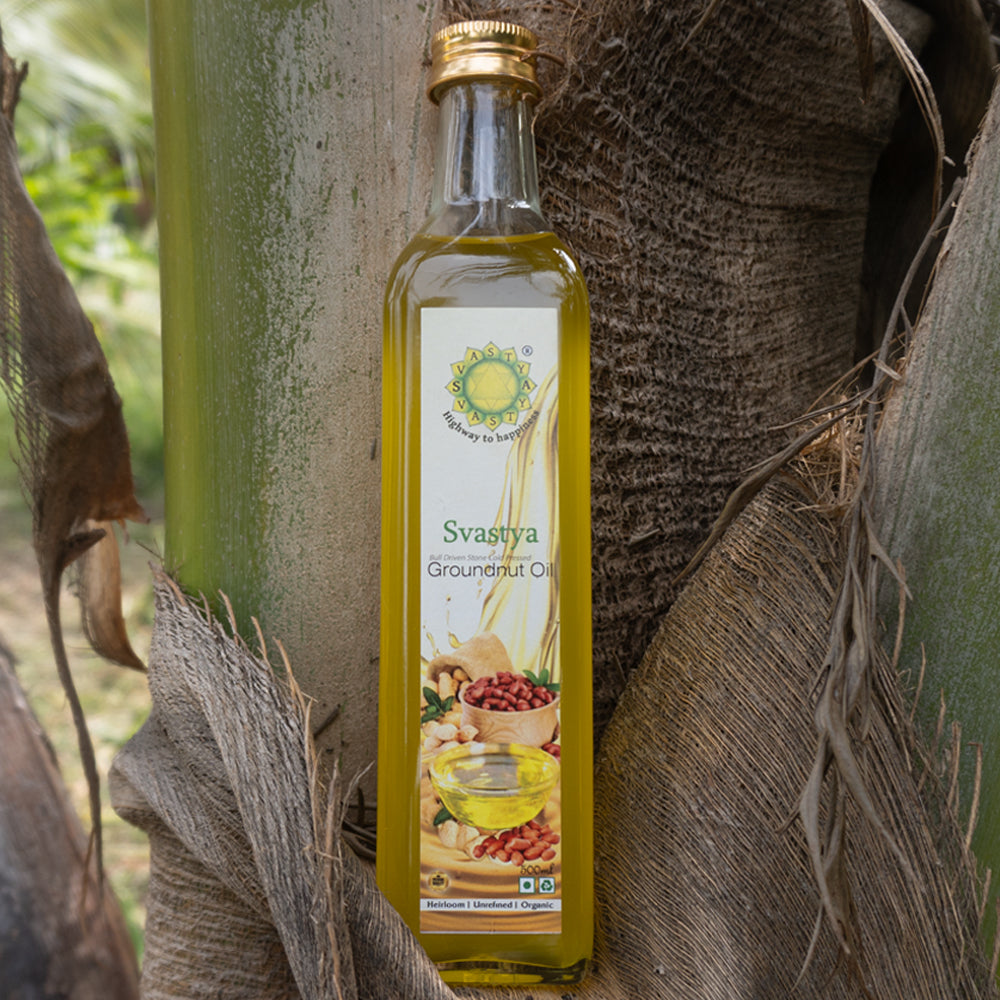
Sourcing transparency: Look for brands that name their source — which farm, which region, which artisans. Svastya believes you have the right to know exactly where your oil comes from.
-
Packaging integrity: Glass bottles protect the oil from light and do not leach chemicals. Meaningful labels state the extraction method explicitly — "bull driven," "wood pressed," or "cold pressed ghani extraction."
Returning to the Oil That Was Always Right
There are choices we make every day in the kitchen and in our self-care rituals that seem small — but compound quietly over years into something significant. The oil you cook with, the oil you apply to your skin, the oil your children grow up knowing — these are not trivial choices.
Bull driven coconut oil is the answer to a question our grandmothers never needed to ask, because the answer was always in the kitchen. It is the choice to return to something that was never broken, that was only temporarily abandoned in the rush of modern convenience.
It nourishes the body because it is complete — nothing taken out, nothing added in. It honours the earth because the process of making it leaves almost no footprint. And it connects us to the artisans, the farms, and the traditions that deserve to continue.
Purity is not a marketing claim. It is a practice. And it begins — simply, beautifully — with the oil you choose.