Apis dorsata: The Spirit of Wild Forest Honey
Apis dorsata: The Giant Honey Bee of India’s Wild Forests
Deep within India’s ancient forests—suspended from towering trees and rugged cliff faces—lives one of nature’s most magnificent creatures: Apis dorsata, the giant honey bee. At Svastya Organic Farms, we honor this remarkable species not only as a honey producer, but as a vital guardian of forest ecosystems and a symbol of pristine wilderness.
The wild forest honey created by Apis dorsata represents nature’s purest nectar—untouched by human intervention and rich with the essence of biodiversity.
Meet the Giant: Understanding Apis dorsata

Commonly known as the rock bee or cliff bee, stands as the largest honey bee species native to India. These impressive insects have thrived for millennia in the subcontinent's forests, developing unique behaviors and characteristics that distinguish them from their domesticated cousins.
Physical Characteristics:
- Workers measure 17-20mm in length, nearly twice the size of common honey bees
- Distinctive dark brown to black body with golden-yellow bands
- Powerful wings enabling long-distance foraging flights up to 5 kilometers
- Aggressive defense mechanisms protecting their precious honey stores
- Large compound eyes adapted for navigation in dense forest canopies
The sheer size and strength of Apis dorsata enable these bees to access nectar sources unavailable to smaller species, contributing to the unique composition of their wild forest honey.
The Architecture of Wild Honey Production

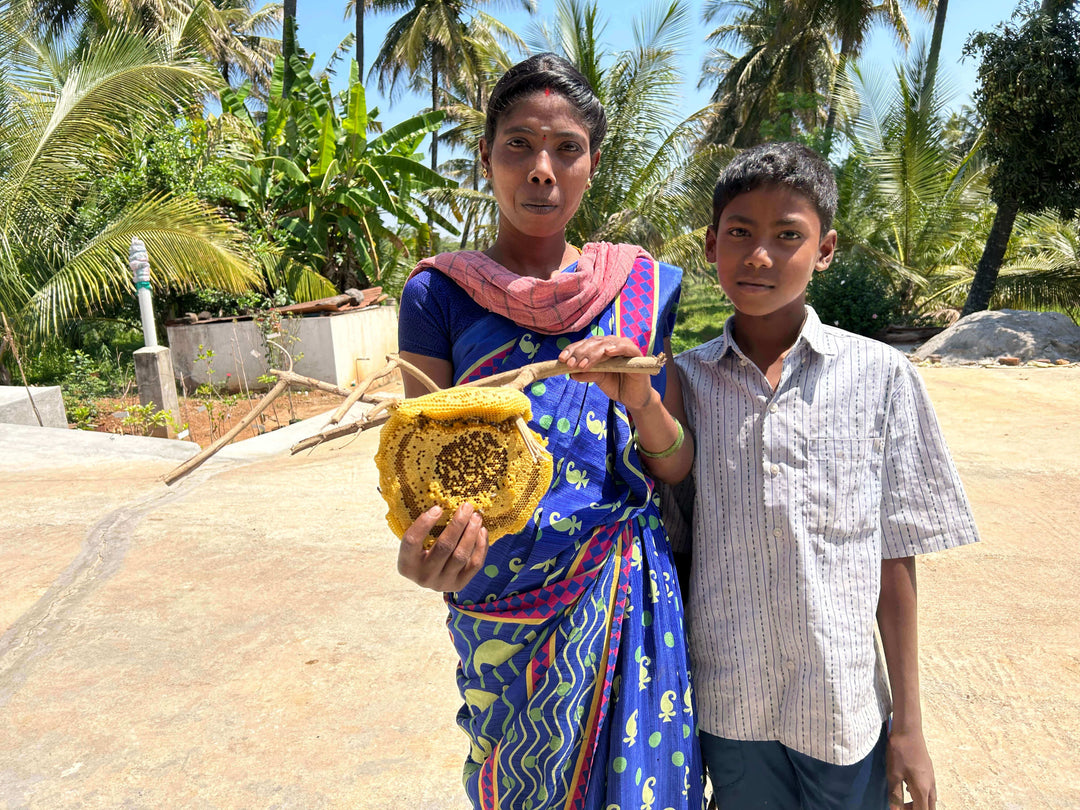
Unlike domesticated bees that build multiple combs within protected cavities, these bees construct a single, massive exposed comb. This architectural marvel can span up to 1.5 meters in length and contains thousands of hexagonal cells filled with golden wild forest honey.
The colony strategically chooses nesting sites that offer natural protection:
- High tree branches 10-25 meters above ground
- Rocky cliff overhangs in mountainous regions
- Undersides of large building structures in rural areas
- Locations with clear flight paths and nearby water sources
While exposed to weather and predators, this nesting style allows efficient temperature regulation and rapid colony movement. A single colony may contain 30,000 to 100,000 bees working in perfect coordination.
The Sacred Journey: Seasonal Migration and Foraging
It exhibits fascinating migratory behavior, following the flowering seasons across India's diverse landscapes. These giant bees embark on remarkable journeys, traveling hundreds of kilometers to locate optimal foraging grounds rich in nectar and pollen.
Seasonal Movement Patterns:
- Pre-monsoon (March-May): Migration to higher elevations following forest blooms
- Monsoon (June-September): Nesting in protected locations during heavy rains
- Post-monsoon (October-November): Return to lower elevations for winter flowering plants
- Winter (December-February): Peak honey production period in many regions
This nomadic lifestyle allows their honey to capture nectar from diverse forest flora such as mahua, jamun, sal, and medicinal herbs, resulting in complex flavors and seasonal variation.
Wild Forest Honey: Nature's Liquid Gold

The wild forest honey produced by Apis dorsata represents one of nature's most treasured superfoods. Unlike commercial honey from managed hives, this forest honey remains completely free from human intervention, antibiotics, or agricultural chemicals.
Unique Properties of Apis dorsata Honey:
- Higher enzyme content due to diverse forest flora and minimal processing
- Rich mineral profile including iron, calcium, magnesium, and potassium
- Elevated antioxidant levels from wild medicinal plant nectar
- Natural antibacterial properties more potent than regular honey
- Complex flavor notes ranging from floral to woody to slightly bitter
- Darker color and thicker consistency indicating high nutrient density
Scientific research has documented the exceptional medicinal properties of wild forest honey, including superior wound healing capabilities, stronger antimicrobial action, and enhanced immune system support compared to commercial honey varieties.
Traditional Honey Hunting: An Ancient Practice

For centuries, indigenous communities across India have practiced the sacred art of honey hunting, harvesting Apis their honey using time-honored techniques passed down through generations. These skilled honey hunters, known as "mahuva" or "madhu gatherers," possess intimate knowledge of bee behavior and forest ecosystems.
Sustainable Harvesting Principles:
- Harvesting during specific moon phases when colonies are calmer
- Using smoke from specific plants to gently pacify bees
- Leaving adequate honey reserves for colony survival
- Avoiding nests with brood (developing bees)
- Returning to the same trees annually, fostering bee-human relationships
At Svastya Organic Farms, we partner with traditional honey hunters who practice ethical harvesting methods, ensuring both bee conservation and livelihood preservation. This approach maintains ecological balance while bringing authentic wild forest honey to conscious consumers.
Conservation Challenges and Our Commitment
Their populations face mounting pressures from deforestation, climate change, pesticide use, and habitat fragmentation. The decline of these giant bees threatens not just wild honey availability, but entire forest ecosystems dependent on their pollination services.
Our Conservation Initiatives:
- Supporting reforestation projects that provide bee habitat
- Educating communities about the importance of wild bee conservation
- Promoting organic farming that eliminates harmful pesticides
- Fair compensation for traditional honey hunters
- Research partnerships studying Apis dorsata ecology and behavior
The Svastya Difference: Authenticity You Can Trust
At Svastya Organic Farms, every jar of wild forest honey represents our commitment to purity, sustainability, and traditional wisdom. We guarantee that our Apis dorsata honey is:
- 100% wild-harvested from pristine forest locations
- Never heated, processed, or adulterated
- Ethically sourced through fair trade practices
- Laboratory tested for purity and quality
- Traceable to specific harvest seasons and regions
Conclusion: Embracing Nature's Wild Spirit
Apis dorsata and its wild forest honey embody the untamed spirit of India's forests—powerful, pure, and irreplaceable. By choosing authentic wild honey, you support forest conservation, traditional communities, and your own wellness with nature's finest superfood.
Experience the profound difference of true wild forest honey. Taste the forest. Taste freedom. Taste Apis dorsata.
FAQs
1. What makes their honey different from regular honey?
Apis dorsata honey is wild-harvested, unprocessed, and sourced from diverse forest flora, making it richer in nutrients and antioxidants.
2. Is wild forest honey safe to consume?
Yes, when ethically harvested and lab-tested, wild forest honey is safe and highly beneficial.
3. Why is Apis dorsata important for forest ecosystems?
Apis dorsata plays a crucial role in pollinating forest trees, supporting biodiversity and ecosystem balance.