Apis cerana: The Indigenous Honey Bee Powering Nature
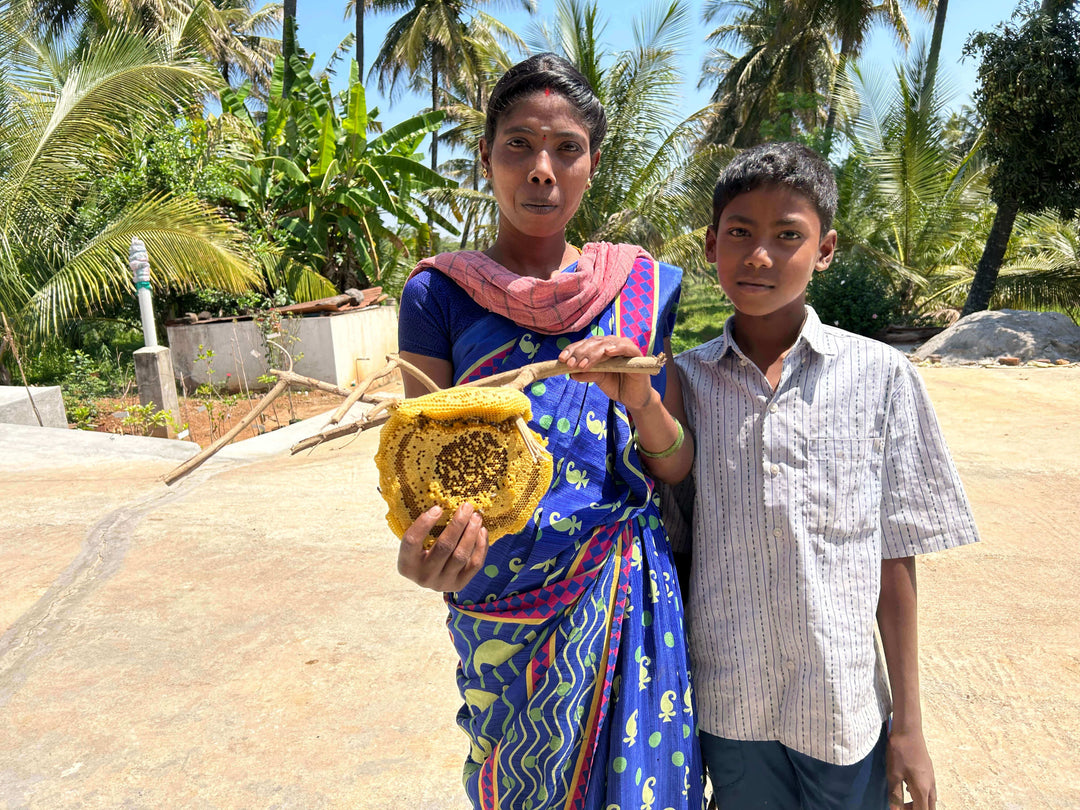
In the heart of India’s agricultural landscape, a humble yet extraordinary pollinator has sustained farming communities for thousands of years. Apis cerana indica, the Indian honey bee, represents the cornerstone of sustainable beekeeping practices that balance productivity with ecological responsibility.
At Svastya Organic Farms, we champion this indigenous species as the ideal partner for organic agriculture—a living example of nature’s perfect design for Indian conditions.
The Indigenous Champion: Understanding Apis cerana

Apis cerana indica, a subspecies of the Asian honey bee, has evolved over millennia to thrive across India’s diverse climatic zones. From the Himalayan foothills to tropical coastal regions, this resilient species consistently outperforms imported bee varieties in sustainable beekeeping systems.
Distinctive Characteristics
-
Medium-sized workers measuring 10–11 mm
-
Golden-brown bodies with dark abdominal bands
-
Docile temperament suitable for small-scale beekeeping
-
Natural resistance to common Indian pests and diseases
-
Strong adaptation to local flora and seasonal cycles
-
Efficient foraging between 15°C and 40°C
Unlike the European honey bee (Apis mellifera), Apis cerana requires minimal human intervention, making it ideal for organic and low-impact beekeeping.
Why Apis cerana Excels in Sustainable Beekeeping

The Indian honey bee possesses natural traits that make sustainable beekeeping both practical and profitable.
1. Disease Resistance and Natural Immunity
Apis cerana shows strong resistance to Varroa mites, reducing or eliminating the need for chemical treatments. This ensures cleaner honey and supports organic certification standards.
2. Low Resource Requirements
These bees thrive in smaller hives and consume less stored honey during lean periods, lowering costs and environmental impact.
3. Climate Adaptability
Apis cerana is perfectly tuned to India’s monsoons and temperature shifts, maintaining productivity without artificial feeding or climate control.
4. Native Flora Specialization
Through co-evolution, these bees have developed deep relationships with indigenous plants, making them highly efficient pollinators of traditional crops, medicinal herbs, and forest species.
The Sweet Rewards: Apis cerana Honey Benefits

Honey produced by Apis cerana is valued for its purity, medicinal qualities, and regional character. While yields are modest (8–12 kg per colony annually), quality consistently outweighs quantity.
Unique Honey Properties
-
High enzyme activity
-
Rich aroma from diverse native flora
-
Documented medicinal benefits in Ayurveda
-
Lower moisture content for better shelf life
-
Distinct regional “terroir” in taste and color
At Svastya Organic Farms, our Apis cerana honey reflects the true essence of our landscapes—pure, traceable, and naturally potent.
Traditional Wisdom Meets Modern Sustainable Beekeeping

India’s beekeeping heritage dates back thousands of years, with honey referenced in ancient texts like the Rigveda and Charaka Samhita. Traditionally, Apis cerana was kept in log hives, clay pots, and wall cavities.
Modern Sustainable Practices
Today, sustainable beekeeping blends traditional wisdom with improved techniques:
-
Newton-style boxes designed for Apis cerana
-
Top-bar hives supporting natural comb building
-
Organic hive management using botanical treatments
-
Seasonal practices aligned with flowering cycles
-
Ethical swarm management to preserve genetics
These methods improve productivity while respecting the bee’s natural behavior.
Apis cerana: Guardian of Organic Agriculture

The true value of Apis cerana extends far beyond honey. These bees are vital partners in organic farming systems.
Pollination Powerhouse
-
Enhances yields in over 70% of cultivated crops
-
Improves fruit size, quality, and nutrition
-
Pollinates during cooler morning hours
-
Shows strong flower fidelity, improving efficiency
-
Supports wild plant regeneration and biodiversity
Studies show Apis cerana pollination can increase yields by 25–40% in crops such as mustard, sunflower, and fruit varieties.
The Svastya Approach: Nurturing Indigenous Bees
At Svastya Organic Farms, we see ourselves as ecosystem stewards rather than honey extractors.
Our Commitments
-
Year-round flowering diversity for continuous forage
-
Zero chemicals—no antibiotics or synthetic treatments
-
Leaving adequate honey reserves for colony health
-
Preserving local genetic strains
-
Training farmers in sustainable beekeeping
-
Fair pricing that honors indigenous honey value
Challenges and Conservation Imperatives
Despite their resilience, Apis cerana faces growing threats from habitat loss, pesticide exposure, climate change, and competition from introduced species.
Conservation Actions
-
Promoting pesticide-free organic zones
-
Creating bee sanctuaries with year-round forage
-
Supporting traditional beekeepers
-
Researching Apis cerana ecology and genetics
-
Advocating for indigenous bee protection policies
Building a Sustainable Future Together
Choosing Apis cerana honey from Svastya Organic Farms supports sustainable livelihoods, protects biodiversity, and strengthens eco-friendly agriculture. Every purchase contributes to a system where quality, ecology, and tradition come first.
Conclusion: The Indigenous Solution
As agriculture confronts global ecological challenges, Apis cerana offers a proven indigenous solution. Resilient, regenerative, and perfectly adapted to India, this native honey bee embodies the principles of sustainable beekeeping.
By protecting Apis cerana, we invest in food security, environmental health, and a sustainable future for generations to come.
FAQs
1. Why is Apis cerana better suited for Indian conditions?
Apis cerana is naturally adapted to India’s climate, flora, and pests, requiring minimal intervention.
2. How much honey does Apis cerana produce annually?
An Apis cerana colony typically produces 8–12 kg of honey per year.
3. Is Apis cerana honey suitable for organic certification?
Yes, when managed without chemicals, it aligns perfectly with organic standards.